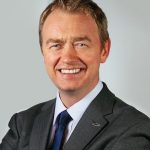
Tag: Tim Farron

  • Tim Farron – 2024 Speech on the Terminally Ill Adults (End of Life) Bill

    Tim Farron – 2024 Speech on the Terminally Ill Adults (End of Life) Bill

    The speech made by Tim Farron, the Liberal Democrat MP for Westmorland and Lonsdale, in the House of Commons on 29 November 2024.

    The motives of those proposing the Bill are grounded in compassion—in the heat of this debate, I want to seriously acknowledge that—particularly the hon. Member for Spen Valley (Kim Leadbeater), who has conducted herself with great dignity throughout. Neither side has a monopoly on compassion—I will always be affected by watching my mum suffer at her death at the age I am now—so let us not think badly of one another’s motives; let us instead be courteous and let us be curious.

    My opposition to the Bill is grounded in compassion. To legalise assisted dying would be to create the space for coercion that would undoubtedly see people die who would not otherwise have chosen to do so. There are no safeguards in the Bill that would prevent that.

    Naz Shah (Bradford West) (Lab)

    Will the hon. Member give way?

    Tim Farron

    I had better not.

    To be fair, no safeguards would be possible, even if we were not going through this hasty process. First, there is the risk of self-coercion. Many of us will have heard older relatives utter words similar to, “I am a burden to you. You would be better off without me.” We all know reasonably instinctively that people will present it as making a sovereign choice, but it will be a choice born out of coercion. Unless there is a clause in the Bill that I have missed to employ mind readers, no amount of doctors, safeguards or bureaucratic mechanisms will prevent those who self-coerce from opting to die simply because they assume that no matter what their loved ones say, everyone would be better off if they were dead.

    To add to the stats we just heard from the hon. Member for Cowdenbeath and Kirkcaldy (Melanie Ward), we know that in Canada more than one in three people opting for assisted dying gave as their reason for choosing to die that they felt they were a burden on others. Honestly, I do not see how we need any further discussion to push us into the No Lobby than that clear evidence from where it is legal.

    Secondly, there is coercive control. In the last Parliament, we passed groundbreaking and long-overdue legislation on domestic violence. As society’s understanding of that often hidden evil has developed, our eyes have been opened to one horrific factor in particular: that of insidious, manipulative coercive control. Thousands of people have been—and are today—victims of those who seek to manipulate their will, take over their lives and coerce them into believing that their perpetrator’s will is actually their will. We all know through our constituency casework of people who have been victims. One common theme is that victims often did not realise that they were being controlled until long afterwards. It can take years for the penny to drop. I do not need to spell it out, then—do I?—that for those coerced into choosing assisted dying, that penny will never drop. They will no longer be with us.

    Thirdly, people will choose assisted dying because of their pain when they would not do if that pain was properly managed. Here is where the evidence from other countries becomes truly disturbing—in fact, terrifying. In the last decade, the countries in Europe without assisted dying increased palliative care investment by over three times more than those that had legalised it. In the United States, those states without assisted dying saw an increase in the size of their palliative care teams that was also three times greater than that in states that had legalised it. That is clearly no accident and no coincidence. Indeed, the group that have contacted me who are most vociferously against the Bill are palliative care doctors.

    Sorcha Eastwood (Lagan Valley) (Alliance)

    The discussion we are having—and I pay tribute to the hon. Member for Spen Valley (Kim Leadbeater) for the way that she has conducted it—almost implies that palliative care is of the same excellent standard across the UK. I have to inform the House that it is not, which is a matter of deep regret. I cannot stand by the Bill because many vulnerable, marginalised people will be impacted by it. I want to support and affirm life, and I want that to be with dignity.

    Tim Farron

    I thank the hon. Lady for her important and powerful intervention. Those palliative care doctors who have been in touch with me know that to opt for legalised assisted dying is to opt, inevitably, to divert resources away from palliative care—that is the evidence. I spoke to one of those palliative care doctors this week, who works in a hospice. She said:

    “The only patients I care for, are those who are dying”.

    We all know what is coming. Assisted dying means a shift in focus away from helping people to live in dignity and comfort, towards simply helping people to die. Then, it becomes a self-fulfilling prophecy. Let us not kid ourselves: palliative care is a postcode lottery in this country, especially for the poor and the old. If the motivation of those who choose assisted dying is to end their pain, we can be absolutely certain that those NHS trusts with the weakest palliative care offer will be those with the highest incidence of people choosing to die. In other words, it will not really be their choice at all.

    An observation made to me by a senior oncologist just last week was that there are fewer more stressful situations in a person’s life than to be given a terminal diagnosis—I remember being with my mum as she was given hers—and to be told you are going to die. The oncologist then explained that among terminally ill people there is a vast amount of severe but undiagnosed depression and psychological illness. Similar but distinct from the danger of self-coercion, there is nothing in the Bill to safeguard against people who suffer like that from choosing to die before their time, yet in so many cases it will be people’s mental health that leads them to choose to die, not their physical condition. We simply cannot be all right with that.

    Here we are, on the precipice of agreeing to sanction and support the deaths of people in despair. Our society has chosen a dystopian and contagious path if it chooses to facilitate the death of those who have a terminal illness rather than standing with them, weeping with them, valuing them and loving them against the desolation that any of us would feel if we were given a diagnosis of that sort. It is no wonder that the Government’s own suicide prevention adviser is strongly opposed to the Bill.

    I totally respect that many of my colleagues in our corner of the House—my fellow liberals—will take a different view. I am opposed to the Bill because I am a liberal. Libertarians believe that personal liberty is so important that there can be no fetters on it. But I am liberal, not a libertarian. I believe that freedom is essential and that the rights of the individual underpin a decent society, but my rights must be held in check if they nullify your rights.

    Since we know—we really do—that to legalise assisted dying is to permit people to die who will self-coerce, as a consequence of manipulative coercive control, outrageously not because of a real, sovereign choice but because of a heartbreaking Hobson’s choice due to inadequate palliative care, I have no right to impose that ultimate and most appalling constraint on the freedom of the most vulnerable in our society. I urge all of us to stand in defence of those most vulnerable people, to defiantly defend their liberty, to make a renewed commitment to world-class palliative care and to human dignity, and to reject the Bill.

  • Tim Farron – 2024 Comments on the Announcement of the General Election

    Tim Farron – 2024 Comments on the Announcement of the General Election

    The comments made by Tim Farron, the Liberal Democrat MP for Westmorland and Lonsdale, on 22 May 2024.

    It’s on!

    Rishi Sunak has just called a General Election for Thursday 4th July.

    Serving our communities as our MP is an absolute privilege. Together we have achieved so much, whether it’s saving local vital health services or even running our train service on the Lakes Line!

    In just a few weeks time, you get to decide who will be your MP for the next 5 years – me or a Conservative.

    I would be honoured if you would put your faith in me to carry on serving you as we make our own luck and get things done.

  • Tim Farron – 2023 Comments on the Spring Budget Speech

    Tim Farron – 2023 Comments on the Spring Budget Speech

    The comments made by Tim Farron, the Liberal Democrat MP for Westmorland and Lonsdale, on Facebook on 15 March 2023.

    It absolutely beggars belief that the Conservatives’ budget had next to nothing in it to address the NHS crisis in Cumbria and across the country.

    People are waiting for hours in A&E, weeks to see a GP, months for cancer treatment, and an eternity for mental health care.

    And what did the Chancellor announce to tackle this disastrous situation? Barely a word, barely a penny.

    Meanwhile the Conservatives have once again shown they don’t care about our rural communities. There was nothing to support us on the big issues we face whether it’s the crisis in farming or on the scandal of sewage being dumped in our lakes and rivers.

    Cumbrians are being taken for granted by this Conservative Government.

  • Tim Farron – 2015 Parliamentary Question to the Department for Education

    Tim Farron – 2015 Parliamentary Question to the Department for Education

    The below Parliamentary question was asked by Tim Farron on 2015-11-23.

    To ask the Secretary of State for Education, on how many occasions emergency services have attended schools because of snow or ice related incidents in each of the last three years.

    Edward Timpson

    The Department does not collect information on the number of occassions on which emergency services have attended schools because of snow or ice related incidents.

  • Tim Farron – 2016 Parliamentary Question to the Ministry of Defence

    Tim Farron – 2016 Parliamentary Question to the Ministry of Defence

    The below Parliamentary question was asked by Tim Farron on 2016-02-08.

    To ask the Secretary of State for Defence, how many (a) reconnaissance, (b) combat and (c) other missions were flown by RAF aircraft over Syria in the last 12 months.

    Penny Mordaunt

    The number of reconnaissance, combat and other missions between 1 February 2015 and 1 February 2016 are detailed in the table below. The majority of aircraft flying missions in Syrian airspace will have flown over Iraqi airspace as well. Reaper, Tornado and Typhoon are multi-role aircraft and as such can be deployed in both a combat mission and a reconnaissance mission. Other missions have been defined as those involved in the transportation of people or equipment.

    Syria

    Iraq

    Reconnaissance Missions

    435

    906

    Combat Missions

    64

    699

    Other

    0

    484*

    *This figure does not include C17, which is estimated to have flown two missions a month in the period in question. The records for C17 are not held centrally and could only be provided at disproportionate cost.

  • Tim Farron – 2016 Parliamentary Question to the Department for Education

    Tim Farron – 2016 Parliamentary Question to the Department for Education

    The below Parliamentary question was asked by Tim Farron on 2016-04-19.

    To ask the Secretary of State for Education, what proportion of children attending primary school were born outside the UK.

    Nick Gibb

    The Department does not collect information about where pupils were born or their nationality.

  • Tim Farron – 2016 Parliamentary Question to the Department for Culture, Media and Sport

    Tim Farron – 2016 Parliamentary Question to the Department for Culture, Media and Sport

    The below Parliamentary question was asked by Tim Farron on 2016-05-23.

    To ask the Secretary of State for Culture, Media and Sport, on what basis the contribution to broadband installation costs for the very remotest properties will be calculated; and whether there will be an upper limit on the contribution which individual households are required to make.

    Mr Edward Vaizey

    Work is ongoing on the design of the broadband Universal Service Obligation (USO) and the reasonable cost threshold. The independent telecoms regulator Ofcom will provide technical analysis and recommendations to help inform both of these, as well as identify the premises likely to be within the USO footprint. These are expected to be predominantly in rural areas, but there will also be urban and suburban homes and businesses eligible to request a connection under the USO.

  • Tim Farron – 2016 Parliamentary Question to the Department for International Development

    Tim Farron – 2016 Parliamentary Question to the Department for International Development

    The below Parliamentary question was asked by Tim Farron on 2016-06-15.

    To ask the Secretary of State for International Development, what plans she has for future funding from her Departmental budget for women’s rights organisations in developing countries.

    Sir Desmond Swayne

    DFID supports a wide range of Women’s Rights Organisations (WROs) through specific central programmes, such as the £8 million pound commitment to Amplify Change, reaching WROs to tackle Violence Against Women and Girls (VAWG), child, early and forced marriage and Female Genital Mutilation; through multilateral programmes, such as up to £6 million pound commitment to the UN Trust Fund to end VAWG which reaches WROs in 76 countries and territories; and through country programmes, such as the £12.5 million pound Strengthening Transparency, Accountability and Responsiveness (STAR) programme in Ghana.

    Future plans are to continue these mechanisms, ensuring their effectiveness and expanding or extending where appropriate, and in implementing DFID’s Civil Society Partnership Review to develop and share learning on reaching WROs and small-scale organisations, so that collectively we achieve a systemic approach to supporting a resilient and effective women’s rights movement.

  • Tim Farron – 2016 Parliamentary Question to the Department for Environment, Food and Rural Affairs

    Tim Farron – 2016 Parliamentary Question to the Department for Environment, Food and Rural Affairs

    The below Parliamentary question was asked by Tim Farron on 2016-09-06.

    To ask the Secretary of State for Environment, Food and Rural Affairs, how many Rural Payments Agency staff have been tasked with responding to telephone enquiries from farmers on the Basic Payments Scheme in each year since 2011-12.

    George Eustice

    All staff in the RPA contact centre deal with external calls covering every part of the agency’s business, including the Basic Payment Scheme introduced in 2015. The contact centre is made up of a core telephony team but additional operational resource is deployed on the telephone lines to meet demand during peak periods. The average number of people, shown in Full Time Equivalents, is given in the table below. Accurate figures before 2013 are not available.

    Year

    FTE

    2013

    64.8

    2014

    81.4

    2015

    131.1

  • Tim Farron – 2016 Parliamentary Question to the Department for International Trade

    Tim Farron – 2016 Parliamentary Question to the Department for International Trade

    The below Parliamentary question was asked by Tim Farron on 2016-09-13.

    To ask the Secretary of State for International Trade, pursuant to the Answer of 12 September to Question 45236, to which destinations (a) ministers and (b) officials have taken flights as part of their official duties since his Department was established.

    Greg Hands

    Since the inception of the department, as part of their official duties Ministers and accompanying officials have visited:

    Rt. Hon Friend the Secretary of State for International Trade (Liam Fox) – USA, India, Switzerland, Bahrain, United Arab Emirates, Qatar, Northern Ireland, Scotland.

    Rt. Hon Friend the Minister of State (Greg Hands) – USA, Germany, Taiwan, Korea.

    Hon Friend the Parliamentary Under-Secretary of State (Mark Garnier) – Burma, Thailand, Israel, France.

    Noble Friend the Minister of State (Lord Price CVO) – China, South Korea, USA, Germany, Brazil, Switzerland, Czech Republic, Hungary, Slovakia.