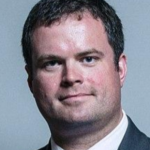
Tag: Kevin Foster

  • Kevin Foster – 2023 Speech on Lifeboat Services – Search and Rescue

    Kevin Foster – 2023 Speech on Lifeboat Services – Search and Rescue

    The speech made by Kevin Foster, the Conservative MP for Torbay, in Westminster Hall, the House of Commons on 10 January 2023.

    I beg to move,

    That this House has considered the contribution of lifeboat services to search and rescue.

    It is a pleasure to serve under your chairmanship, Mr Davies. I am grateful to my colleagues on the Backbench Business Committee for granting me this debate, and of course to my hon. Friend the Member for Totnes (Anthony Mangnall), who did the legwork on the application to secure it.

    It is worth giving some context at the debate’s start. Search and rescue provision in the UK is delivered through an amalgam of Government Departments, emergency services and various SAR charities and voluntary organisations. UK SAR is arranged through the UK SAR Strategic Committee, an interdepartmental body chaired by the Department for Transport, hence our being joined by a DFT Minister and his shadow. His Majesty’s Coastguard provides a response and co-ordination service for air and sea-based SAR in the UK. HM Coastguard has existed since 1822, and of course celebrated its bicentenary last year. The coastguard co-ordinates air and sea-based SAR through its nine operation centres around the UK. They are in Shetland, Aberdeen, Humber, Dover, Fareham, Falmouth, Milford Haven, Holyhead, Belfast and Stornoway. In addition, the London coastguard, which is co-located with the Port of London authority, looks after SAR on the River Thames. HM Coastguard has its national maritime operations centre in Fareham in Hampshire.

    Lifeboats are not the only part of SAR at sea; many organisations, including the Royal Navy, Royal Air Force, commercial vessels in the vicinity of an incident and HM Coastguard’s helicopters, play their part, but in this debate, I will focus on the lifeboat service. The classic image of the lifeboat service is one of heroism, and of its crews fighting through rough seas to save lives. The courage of those involved, and their commitment to saving those in peril on the sea, are the anchor that holds the crew together during a rescue mission while, in the words of the famous hymn,

    “the breakers roar and the reef is near”.

    No debate such as this should pass without mention of how that legendary bravery was demonstrated on 19 December 1981, when the Penlee lifeboat headed out into atrocious conditions to try to save the lives of eight people in peril. Tragically, all eight lifeboat crew were lost that night. It was the last time the Royal National Lifeboat Institution lost a whole crew in one incident—a record that I am sure we hope will stand for many years to come.

    It is of course the RNLI that most people will think of when they hear a reference to lifeboats. It was founded as the Royal National Institution for the Preservation of Lives and Property from Shipwreck in 1824. In 1854, it changed its name to what we know it as today. Its main base is in Poole, Dorset. It has 238 lifeboat stations, and an active fleet of 431 lifeboats, which range from large, all-weather lifeboats to smaller inshore vessels.

    The impact of the RNLI’s work cannot be overestimated. Its operations have saved over 143,900 lives since 1824, and it is not just men who have been the heroes: Grace Darling became one of the Victorian era’s most celebrated heroines when, on 7 September 1838, she risked her life to rescue the stranded survivors of the wrecked steamship Forfarshire. Today, around 95% of the RNLI team are volunteers; they are around 5,600 crew members, 3,700 shore crew, including station management, 82 lifeguards, and 23,000 fundraisers. The scale of the RNLI’s contribution to search and rescue is immense. In 2021 alone, there were 8,868 lifeboat launches, 84 of which were in at least force 8 conditions, and 1,022 crew assemblies—a total of 9,890 taskings. That resulted in 12,903 people being aided, and 296 lives being saved.

    The RNLI’s work is about not just reacting when things go wrong, but reducing the need for search and rescue by educating and advising on dangers. RNLI water safety teams reached more than 27 million people in 2021 with essential messaging, undoubtedly saving more lives and keeping families together.

    We should bear in mind that lifeboat services are not just about the RNLI—a subject that is close to the heart of my hon. Friend the Member for Totnes. In addition to the RNLI, a number of voluntary organisations provide independent lifeboats for the purpose of saving lives on the water. There are more than 50 independent lifeboat organisations around the UK, and independent lifeboats operate in coastal areas—for example, the Hope Cove lifeboat in south Devon—and on inland waters, rivers and lakes, while some organisations operate independent lifeboats alongside other search and rescue services, such as mud rescue. The majority of those independent lifeboats are equipped, maintained and operated in accordance with the rescue boat code.

    Independent lifeboat organisations vary greatly in size, crew numbers, rescue numbers and types of rescue boat used. Crews range from the 12 crew members at Port William Inshore Rescue Service in Dumfries and Galloway to the around 260 crew members at Community Rescue Service, which operates across Northern Ireland; and call-outs range from the five call-outs in 2021 for the Sea Palling independent lifeboat in Norfolk to more than 120 for the Hamble lifeboat in Hampshire. The rescue boats involved range from small RIBs—rigid inflatable boats—to large all-weather lifeboats, which are comparable to the boats that many people associate with the RNLI.

    Bob Seely (Isle of Wight) (Con)

    My hon. Friend is making an excellent speech and I thank him for doing so. He is making important points about independent lifeboats, but also about the support services. We have independent lifeboats at Freshwater, Sandown and Shanklin in the Isle of Wight, which do wonderful work, on top of the RNLI stations at Bembridge, Cowes and Yarmouth. Not only that, but our inshore lifeboat centre in East Cowes keeps half the nation’s fleet of RNLI boats in good condition. Will my hon. Friend join me in paying tribute to those services?

    Kevin Foster

    I am delighted to hear my hon. Friend list the amazing support that the Isle of Wight provides. It does not just save lives and help those in peril on the sea around the Island—as he knows, some of those waters famously present obstacles and risks to passing shipping, and it is worth paying tribute to the many Islanders over the years who have put their life at risk trying to save those in peril near the Island—but makes a wider contribution to the service. As he says, lifeboat services are not just about the team who go out on the boat; they are about the support network that enables the lifeboat teams to go out. It is great to be able to pay it the tribute that he just did.

    Independent lifeboats are not a new invention, and the first independent lifeboat station was formed in Formby, Lancashire, in 1776. Although many independent lifeboat stations were RNLI stations when they were established, others have been set up in response to specific incidents. For example—I see colleagues from Northern Ireland in the Chamber—Foyle Search and Rescue was set up by local people in 1993 in response to the alarmingly high number of drownings in the River Foyle, 30 in 18 months. It has since adopted a role in suicide prevention and supporting families in the city more widely. That shows the diversity in the types of work that such organisations can take on, and the contribution that such services can make.

    It is right that we remember the contribution that those organisations make, and how their work is supported by the National Independent Lifeboat Association, a new charity founded last year by my hon. Friend the Member for Totnes. All independent lifeboats in Great Britain and Northern Ireland were invited to join the association, and it has 30 members from England, Wales, Scotland, Northern Ireland and Jersey.

    During my preparations for the debate, it was made clear to me that the RNLI is proud of its independence and the fact that it can operate free from requirements of the type that Government funding would bring. I was advised of that in the knowledge that such debates can sometimes involve the subject of whether the service offered by the RNLI should be publicly funded, rather than our having the current funding arrangements, which are based on voluntary giving.

    It might seem strange to some, but this service is not lobbying for Government funding. That position recalls the fact that, a decade ago, a former Prime Minister described his vision of creating a big society—a concept in which individuals come together to tackle an issue or make a difference, rather than the state setting up structures to intervene that might often be less effective or efficient. There are often debates about how that concept can be defined in real life, but in many ways lifeboat services reflect that idea, from the crews who volunteer their time to train, and who are ready to answer the call of duty, to fundraising teams in communities who raise the resources needed to support operations, to the many community members who do their bit by simply dropping a few coins into a collection box when they buy a pint, visit the local shop or walk past one of the many collection boxes across coastal communities. Also included are people who, when thinking about the legacy they want to leave, tell their solicitor to include the lifeboat service in their will. This shows how society comes together to help others in need, and to provide a unique service that we can all benefit from, but hope never to need.

    Those who regularly hear me speak know that I will not miss an opportunity to highlight the work being done in south Devon, and I will start with the Torbay RNLI lifeboat station. It was established in Brixham in 1866 and has occupied the same premises since 1872. It was established after a fleet of merchant ships were caught in hurricane-strength winds in Torbay in January 1866, causing the loss of about 40 ships and nearly 100 lives. Today, the lifeboat station has 35 crew members, including those who are shore-based. The station operates two lifeboats that reflect the diversity of the rescues that the station may be called on to perform: a Severn class all-weather lifeboat and a D-class inshore lifeboat. The crew members are volunteers who mostly have day jobs.

    In 2022, Torbay RNLI lifeboat station responded to 111 shouts. The station is supported by the Torbay Lifeboat Fundraisers, who work throughout the year to raise the funds needed to support the lifeboat. The group has over 200 volunteer members, and it organises a range of events and activities to raise money. I thank everyone in Torbay who supports them; the crew would not be ready to save lives without their contribution.

    I pay tribute to the team at the National Coastwatch Institution in Torbay, who also play a part in search and rescue operations in south Devon. NCI watchkeepers, who are volunteers, provide eyes and ears along the coast, monitoring radio channels and providing a listening watch in poor visibility. When people get into trouble, NCI watchkeepers can alert His Majesty’s Coastguard and direct the appropriate rescue teams, including lifeboats, to the casualty. The NCI station at Torbay is one of over 50 such stations located around England and Wales. Located at Daddyhole plain, it is the first purpose-built NCI watch station. In January 2012, the station was given declared facility status, meaning that the station was not only fully operational, but fully recognised in search and rescue operations as having the same status as RNLI lifeboat stations. That shows the benefit of partnerships between organisations that save lives.

    Lifeboats are as vital to search and rescue operations today as they were in the era when horses drew the boat to the launching point and the crew pulled on the oars against the high sea to reach a vessel in distress. Direct funding is not sought, but I am interested to learn from the Minister how he sees the future for our lifeboats, and on a couple of other points.

    First, some independent lifeboats are not fully declared HM Coastguard rescue facilities, often because of the complex process that must be undertaken to become such a facility. Does the Minister see an opportunity to simplify the process, without compromising standards? Secondly, independent lifeboats are not represented on the UK SAR operators group, but hope to join the group later this year. Will he provide an update on that? Finally, how does he see the work of lifeboats and their contribution to search and rescue fitting into wider efforts to improve safety at sea?

    The debate is a good opportunity to highlight the contribution of lifeboat services to UK search and rescue. As we speak, crews across the UK stand ready to answer the call to save those in peril; they are ready to face whatever dangers that may bring. They are some of the best of our nation, and I end with a simple message to them: thank you.

  • Kevin Foster – 2016 Parliamentary Question to the Department of Health

    Kevin Foster – 2016 Parliamentary Question to the Department of Health

    The below Parliamentary question was asked by Kevin Foster on 2016-09-09.

    To ask the Secretary of State for Health, if he will make a comparative assessment of the earning distribution of hospital and community health service doctors to the earning distribution of workers in professional occupations.

    Mr Philip Dunne

    The best available comparison, for 2015, is shown in the table below. The Hospital and Community Health Service (HCHS) Doctors figures relate to the earnings of doctors employed by the NHS Hospital and Community Health Service in England, and are based on NHS Earnings Estimates published by NHS Digital. General practitioners are not included. The All Professional Occupations figures represent the earnings of all employees nationally in Professional Occupations, as published by the Office for National Statistics.

    Percentile

    All Professional Occupations

    HCHS Doctors

    10

    £15,331

    £45,000

    20

    £22,168

    £52,500

    30

    £26,557

    £61,500

    40

    £30,465

    £73,500

    Median

    £34,076

    £87,500

    60

    £37,467

    £99,500

    70

    £41,675

    £110,500

    80

    £47,506

    £124,000

    90

    £59,320

    £144,500

    Sources: All Professional Occupations earnings statistics published by the Office for National Statistics, from its 2015 Annual Survey of Hours and Earnings.

    HCHS Doctors earnings figures based on statistics published by NHS Digital, from NHS Electronic Staff Record data, in NHS Staff Earnings Estimates to December 2015. The NHS Electronic Staff Record is the HR and Payroll system used by almost all National Health Service trusts and foundation trusts in England.

    Both sets of figures are the estimated total earnings in 2015 of employees who worked for the full year, regardless of their working hours (i.e. this includes both full-time and part-time workers).

    The All Professional Occupations group covers occupations whose main tasks require a high level of knowledge and experience in the natural sciences, engineering, life sciences, social sciences, humanities and related fields. The main tasks consist of the practical application of an extensive body of theoretical knowledge, increasing the stock of knowledge by means of research and communicating such knowledge by teaching methods and other means.

    Most occupations in this major group will require a degree or equivalent qualification, with some occupations requiring postgraduate qualifications and/or a formal period of experience-related training.

  • Kevin Foster – 2016 Parliamentary Question to the Department of Health

    Kevin Foster – 2016 Parliamentary Question to the Department of Health

    The below Parliamentary question was asked by Kevin Foster on 2016-09-09.

    To ask the Secretary of State for Health, if he will make a comparative assessment of the average earnings for hospital and community health service doctors and the average earnings for workers in professional occupations in each age band.

    Mr Philip Dunne

    The best available comparison for 2015 is shown in the table below. The figures are for doctors employed by the NHS Hospital and Community Health Service in England (HCHS) and are based on NHS Earnings Estimates published by NHS Digital. General practitioners (GPs) are not included. The All Professional Occupations figures represent all employees nationally in Professional Occupations, as published by the Office for National Statistics.

    Age Range

    All Professional Occupations

    HCHS Doctors

    22-29

    £28,958

    £41,390

    30-39

    £36,456

    £61,885

    40-49

    £40,603

    £94,470

    50-59

    £40,138

    £112,924

    60+

    £32,564

    £96,629

    Sources: All Professional Occupations earnings statistics published by the Office for National Statistics, from its 2015 Annual Survey of Hours and Earnings.

    HCHS Doctors earnings figures are based on statistics published by NHS Digital, from NHS Electronic Staff Record data, in NHS Staff Earnings Estimates to December 2015. The NHS Electronic Staff Record is the HR and Payroll system used by almost all National Health Service trusts and foundation trusts in England.

    Both sets of figures are the estimated mean average total earnings in 2015 of employees who worked for the full year, regardless of their working hours (i.e. this includes both full-time and part-time workers). The figures do not include GPs.

    Equivalent figures are not available for GPs, because most provide services through commissioning rather than direct employment.

    The ‘All Professional Occupations’ group covers occupations whose main tasks require a high level of knowledge and experience in the natural sciences, engineering, life sciences, social sciences, humanities and related fields. The main tasks consist of the practical application of an extensive body of theoretical knowledge, increasing the stock of knowledge by means of research and communicating such knowledge by teaching methods and other means.

    Most occupations in this major group will require a degree or equivalent qualification, with some occupations requiring postgraduate qualifications and/or a formal period of experience-related.

  • Kevin Foster – 2016 Parliamentary Question to the Department of Health

    Kevin Foster – 2016 Parliamentary Question to the Department of Health

    The below Parliamentary question was asked by Kevin Foster on 2016-09-13.

    To ask the Secretary of State for Health, if he will make a comparative estimate of the level of proposed average pay under the new junior doctor’s contract for a junior doctor working (a) part-time, (b) full-time and (c) as a full-time trainee.

    Mr Philip Dunne

    Under the new contract, which is based on the principle of equal pay for work of equal value and pay for hours worked, full time trainees working at the same level of responsibility will receive the same basic pay and will be paid the same unsocial hours and weekend allowances depending on how many they work. Less than full time trainees working at the same level of responsibility will receive equal pay to full timers pro-rated to the number of hours that they work. Weekend and on-call allowances are also pro–rated.

    Those trainees working at ST4 and above will continue to be paid under the terms of the old contract, under transitional arrangements.

    At the British Medical Association’s request, it was agreed that there would be four levels of responsibility within the junior doctor training path for pay purposes.

  • Kevin Foster – 2015 Parliamentary Question to the Department of Health

    Kevin Foster – 2015 Parliamentary Question to the Department of Health

    The below Parliamentary question was asked by Kevin Foster on 2015-11-03.

    To ask the Secretary of State for Health, what value of NHS property has been (a) acquired and (b) sold in each (i) parliamentary constituency and (ii) clinical commissioning group area in each of the last five years.

    George Freeman

    Information about the value of property and land sales for the National Health Service is held centrally only for 2013-14 and 2014-15. We do not hold information by clinical commissioning group or parliamentary constituency. Information about acquisitions of property by the NHS is not recorded centrally.

    (a) Value of property sold:

    2013-14

    2014-15

    NHS Trusts and Foundation Trusts

    £179.9 million

    £155.8 million

    NHS Property services

    £24.9 million

    £57.8 million

    (b) Value of property acquired. We do hold this information for NHS Property Services and this is shown below:

    2013-14

    2014-15

    NHS Property Services

    £3.0 million

    £18.1 million

    NHS Trusts/Foundation Trusts

    Not recorded

    Not recorded

  • Kevin Foster – 2016 Parliamentary Question to the Department for Transport

    Kevin Foster – 2016 Parliamentary Question to the Department for Transport

    The below Parliamentary question was asked by Kevin Foster on 2016-09-13.

    To ask the Secretary of State for Transport, if he will make plans to introduce number plates for all mobility scooters to ensure that such scooters could be traced in the event of a collision with a pedestrian.

    Andrew Jones

    Mobility scooters have to comply with the prescribed conditions and requirements set out in the ‘Use of Invalid Carriages on Highways Regulations 1988’ which divides them into two main categories.

    The Class 2 type can travel at 4mph and is primarily intended for use on the footway or footpath. 4 mph is considered appropriate for pavement use as it is akin to a brisk walking pace.

    The Class 3 type can travel on the road at up to 8 mph, but must have the facility via a limiter to be driven at no more than 4 mph when used on the footpath.

    Users of new or second hand Class 3 vehicles are required to register their vehicles with the Driver and Vehicle Licensing Agency (DVLA) for use on public roads. However, there is currently no requirement to display the vehicle registration number on the scooter and I have no plans to change this.

  • Kevin Foster – 2016 Parliamentary Question to the Department for Work and Pensions

    Kevin Foster – 2016 Parliamentary Question to the Department for Work and Pensions

    The below Parliamentary question was asked by Kevin Foster on 2016-09-02.

    To ask the Secretary of State for Work and Pensions, whether there is provision to ensure that both parents in a separated couple receive financial assistance for their children when joint custody has been approved.

    Damian Hinds

    Where a separated couple have joint custody for their children, only one of them will receive financial assistance for those children through Universal Credit. The separated couple may jointly nominate which of them that will be. The parent who receives financial support is the one whom the child normally lives with, but if the child normally lives with both, then it is the parent who has main responsibility for the child. This is to be decided by the parents, or failing that, the Secretary of State if the parents cannot agree or if the Secretary of State does not think that the nomination accurately reflects the arrangement. HM Revenue & Customs administer Child Tax Credit and Child Benefit and the rules similarly require that payment is directed towards the person who is mainly responsible for the child, so that at any one time, only one person can be entitled to receive payments in respect of a particular child.

  • Kevin Foster – 2016 Parliamentary Question to the Department of Health

    Kevin Foster – 2016 Parliamentary Question to the Department of Health

    The below Parliamentary question was asked by Kevin Foster on 2016-10-07.

    To ask the Secretary of State for Health, based on today’s values, what the expected lifetime earnings are for a junior doctor starting in training in August 2016 if they become (a) a consultant, (b) a GP and (c) remain a junior doctor; and what assessment his Department has made of how those earnings compare to other (i) public and (ii) private sector professionals.

    Mr Philip Dunne

    The career earnings of a doctor will depend on many factors and are therefore highly specific to individual circumstances. They will depend on decisions around gap years and career breaks, part-time working, the choice between general practice and other specialties, when they leave the National Health Service or retire and on the speed of progression through training. However, indications can be provided by constructing a hypothetical career based on reasonable assumptions in-line with current data.

    It is estimated that assuming a 40 year full time career from Foundation Programme up to consultant or partner in General Practice, a junior doctor starting training in August 2016 could expect to earn around £4 million or an average of around £100,000 per year in 2016/17 prices.

    Comparisons of pay across industries and sectors are notoriously difficult, capturing differences in pressures and working patterns is particularly complicated. Comparison of recent earnings growth for doctors compared with other high-earning occupations shows that doctors remain one of the very highest-earning occupations in the United Kingdom.

  • Kevin Foster – 2016 Parliamentary Question to the Ministry of Defence

    Kevin Foster – 2016 Parliamentary Question to the Ministry of Defence

    The below Parliamentary question was asked by Kevin Foster on 2016-09-02.

    To ask the Secretary of State for Defence, what steps are being taken to prevent discrimination against people with dyslexia in the Armed Forces.

    Mark Lancaster

    Dyslexia is one of four specific learning difficulties (SpLD, including dyspraxia, dyscalculia and scotopic sensitivity syndrome) recognised by the Armed Forces which are not a bar to recruitment or service in the Armed Forces, as long as all applicable recruitment, training and job performance standards are met in full. SpLD are viewed by the Armed Forces as naturally occurring differences in learning that, through targeted support and the implementation of coping strategies, can generally be successfully mitigated. Many dyslexic Armed Forces personnel are enjoying successful careers.

    Individuals affected by SpLD are eligible for specific support which may include reasonable adjustments to training and working environments. SpLD is recognised as being an issue that is principally and proactively managed by the individual, supported where necessary by their Chain of Command and not a condition which should draw undue attention, impractical or unmanageable special measures or stigma.

    Detailed policy guidance on SpLD is accessible at unit level through Joint Service Publication (JSP) 898 ‘Defence Direction and Guidance on Training, Education and Skills’. In addition, the single Services have trained SpLD advisors who can offer advice, guidance and a range of strategies to help individuals get the support they need. These advisors administer the dyslexia adult screening test (DAST) to assess personnel once a trainer, trainee, line manager or member of the Services suspect dyslexia. The test is not mandatory; it is administered only with the individual’s consent. The DAST result will determine whether further specialist assessment by an educational psychologist is required and also provide a profile of strengths and weaknesses which will support any necessary remedial training programme.

  • Kevin Foster – 2016 Parliamentary Question to the Department of Health

    Kevin Foster – 2016 Parliamentary Question to the Department of Health

    The below Parliamentary question was asked by Kevin Foster on 2016-10-07.

    To ask the Secretary of State for Health, what assessment he has made of the effect of the new junior doctors’ contract on the average pay of junior doctors.

    Mr Philip Dunne

    The average pay of junior doctors will not change. The cost neutrality of the new contract means that the contract cannot in anyway be used to save money – it maintains the current spend for the current number of full-time equivalent doctors working the current average working week. The British Medical Association itself acknowledged this commitment and communicated it to its junior doctor members before the vote on the contract. Any growth in the junior doctor workforce/commitment will be funded from outside that envelope and the same average pay would apply to new juniors working the same working patterns.