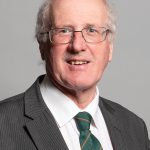
Tag: Jim Shannon

  • Jim Shannon – 2023 Speech on Lifeboat Services – Search and Rescue

    Jim Shannon – 2023 Speech on Lifeboat Services – Search and Rescue

    The speech made by Jim Shannon, the DUP MP for Strangford, in Westminster Hall, the House of Commons, on 10 January 2023.

    Thank you, Mr Davies, for chairing the debate and for giving me a chance to participate. I thank the hon. Member for Torbay (Kevin Foster) for setting the scene so well, and hon. Members for contributing to the debate.

    Lifeboats and their services are imperative for safety in coastal communities, which is the key issue for me. The hon. Member for Torbay represents a coastal area that is similar to my constituency of Strangford, and we follow each other in debates more often than not—either him before me or me before him. The neighbouring constituency of North Down also has coastal areas with lifeboats, and people rely on the local stations.

    It is great to be here to give them the praise they truly deserve and to thank them for their work and efforts.

    Thousands of people along the coastline of Northern Ireland depend on the services of the RNLI for their protection and safety. During the summer, thousands of families and young people partake in coastal sports such as sailing, surfing and pier jumping. I used to do that myself off Ballywalter harbour, although that is not a very wise thing to do—always ensure the tide is in or there is big trouble. In addition, people go out in canoes and boats to fish, including from the fishing village of Portavogie. There are caravan parks at Millisle and my home village of Ballywalter, where I was brought up. They lie very close to where I live on the edge of Strangford lough. I am aware of the sheer number of water sports undertaken in this area.

    The RNLI charity provides a 24-hour search and rescue service around the United Kingdom and Republic of Ireland. Across the entire UK, there are 238 lifeboat stations, 46 of them in Northern Ireland. There are also 240 lifeguard units on beaches, which gives an idea of the magnitude of the issue. I found this figure incredible: since the RNLI was founded in 1824, its lifeboat crews have saved more than 142,700 lives. That is an enormous figure.

    We are fortunate to have a lifeboat station in Portaferry in my constituency, and I visited the station just before the summer. Portaferry is one of seven RNLI lifeboat stations operating a lifeboat funded by viewers of the BBC TV programme “Blue Peter”. Some of us can cast our minds back to that, although others cannot go back that far. The station was established due to increased pleasure boating in Strangford lough, after Cloughey lifeboat station closed. Most recently, in November, the Portaferry lifeboat station came to the aid of two kayakers who got into difficulty near St Patrick’s rock in Strangford lough, and who faced weather conditions of wind force 8 to 10. Since the station opened in 1980, there have been 850 launches, rescuing 600 people and saving the lives of 100 people. That is just my lifeboat station in Portaferry. Thank you to all lifeboat crews, past and present, for their commitment.

    Last year, I attended the parliamentary launch of the National Independent Lifeboat Association. I think the hon. Member for Torbay sponsored that event. It is important to pay thanks to those independent lifeguards and life-saving organisations who risk their lives in dangerous seas to help save others.

    Margaret Ferrier (Rutherglen and Hamilton West) (Ind)

    Does the hon. Gentleman, like me, welcome the representation provided by the National Independent Lifeboat Association for smaller lifeboat operators, which might otherwise be overlooked?

    Jim Shannon

    I certainly do. We have all said how much we appreciate that. The hon. Member for Torbay said that in his introduction. My hon. Friend the Member for East Londonderry (Mr Campbell) will recognise the independent ones in his contribution. I am thinking of the Foyle rescue team, about which we have spoken. We understand the commitment that those volunteers give. When I visited Portaferry before the summer, I was greatly impressed by their commitment and by the fact that they were there every time they were needed.

    There are 46 independent lifeboat organisations that operate along the coastline and on inland waterways across England, Wales, Scotland and Northern Ireland. Those independent lifeboats are run primarily, if not entirely, by volunteers, and funded by local donations. The invaluable service they provide has saved the lives of so many and, in conjunction with the RNLI, they continue with those dedicated efforts day in and day out to save people. They are an asset to our communities. We would be completely lost without them, and many lives would sadly be lost as well. I am not the only who was moved by adverts on TV for RNLI showing a lady leave her house over Christmas to go and save people. We see how important these crews are when we recognise what they do.

    To conclude, there are many ways in which we can support institutions such as the RNLI. It is possible to become a volunteer or a member, and even train to become assistance personnel. There are many things that people can do, including fundraising and donating money to ensure the RNLI staff have the best equipment available to fulfil their duties and be able to perform with the correct number of staff.

    I sincerely thank the RNLI Portaferry team for all their dedication and work in my constituency. I also thank the lifeboat teams across Northern Ireland and the whole of the UK for the work they do, as our coastal communities would literally be lost without them. I live in a coastal community and understand what it means to have the RNLI, and I thank them very much.

  • Jim Shannon – 2023 Speech on Snares

    Jim Shannon – 2023 Speech on Snares

    The speech made by Jim Shannon, the DUP MP for Strangford, in Westminster Hall on 9 January 2023.

    I am very pleased to speak in the debate. I have been a long-time sports enthusiast and I love the countryside. I live on a farm and am a member of the Ulster Farmers’ Union, the British Association for Shooting and Conservation, and the Countryside Alliance. I am also a member of Country Sports Ireland. I say that because I want to put things in context, and it is important that I do so.

    I thank the hon. Member for Don Valley (Nick Fletcher) for setting the scene, and I understand that he is here to represent the petitioners, but I feel that I must represent what I believe to be a balanced point of view about ensuring the survival of lapwings and curlews, which the hon. Gentleman mentioned. On our farm, we used to have hundreds and thousands of lapwings along the edge of Strangford lough, where I live. Those numbers have decreased. Why? I would suggest that it is because of the predation of a number of animals and the move towards using the main restraints, as I would refer to them. We have to acknowledge that there has been a very clear movement among the people.

    I am proud that the main thrust of country sports is conservation and preserving the countryside for future generations, and I have certainly passed on my love of country sports to my son Jamie and my granddaughter Katie. They have learned at first hand that our first duty is to sustaining the land and to the farmers who live around us, which is really important.

    As the representative of a mixed urban and rural constituency, I have an acute awareness of the needs of the farming community. I am often guided by the needs of the agri-industrial sector in co-operation with advancing information and ways forward in our modern world. I am certainly not against change, but I am in the business of realism in what we are trying to achieve. I am proud of how farmers have taken on diversification and made changes that their grandfathers may never have understood. At the same time, I have a real respect for the generational learning that cannot be understood and felt through a report on a page alone.

    I made contact with the Countryside Alliance, which provided the following statement for the debate. I will quote it in its entirety, as I think it is important that we hear it all. It says:

    “Snaring is one of a range of essential measures used to manage certain species, the control of which underpins agriculture production, farm animal husbandry, the sustainable harvesting of gamebirds and the protection of species of the highest conservation concern, including the curlew. Specifically, it is a legitimate and effective form of fox control, especially in habitats where other control techniques are either ineffective or impractical.”

    Whenever we say, “Do away with everything”, we must have an alternative. That is what I want to put forward. I think the Government have the alternative. That is the position we are at. The Countryside Alliance statement continues:

    “In response to previous calls for the Government to ban the production and use of snares, the Countryside Alliance and other countryside organisations work with DEFRA”—

    the Minister’s Department—

    “to produce a code of best practice on the use of snares for fox control in England, which was published in 2016. That code reflected the current state of knowledge, following extensive research into the use of fox snares by different interest groups, snare design, operating practices, selectivity, and the condition of captured animals.”

    Kirsten Oswald

    The hon. Member is making a point about DEFRA and its involvement in this area. Could he reflect on his views on DEFRA’s independent working group on snaring and the paper that it produced, which details the kind of suffering and injuries that animals that are snared might experience? There is pain associated with dislocations, and there is fear, stress, anxiety, injuries to muscles, thirst, hunger, exposure and inflammatory pain, as well as malaise associated with infections. I could go on at significant length. I wonder if that is a part of the report that he has reflected on.

    Jim Shannon

    I am very happy to reflect on the opinion of the hon. Lady and others as well. What I am saying is that the snares of yesteryear are not acceptable, but the humane restraints that the Government permit today are a way of moving forward. When the hon. Member for Don Valley introduced the debate, as well as in conversations we have had before, he mentioned how the Department has moved forward. I say quite clearly that to have the snares of yesteryear would be totally wrong, because there is little or no humane control in them. What we have today with the humane restraints is a methodology, and that is what DEFRA has. I think there is a way forward.

    The Countryside Alliance further states:

    “Code compliant snares are a restraining, rather than killing, device, and only these can be used in England. Although fox trapping is not subject to the Agreement of International Humane Trapping Standards, research has also indicated that code of practice compliant snares, operated according to best practice, past the Agreement’s requirements for humaneness. As a humane and effective means of fox control, snares are an essential management tool that we cannot afford to lose.”

    It also says, very clearly:

    “Any changes to current legislation and regulations must be proportionate and justified.”

    I accept what the hon. Member for East Renfrewshire (Kirsten Oswald) is saying, and I agree with her, but I think what the Government have on humane restraints is the right way of doing this.

    The hon. Member for Don Valley referred to gamekeepers. I am a shooting man; that is no secret. I understand that we have to pest control animals, including birds. I want to see curlew and lapwing in the numbers that there once were. We have heard that on the Yorkshire moors, for example, where there were once 20 or 30 curlew and lapwing nesting, there is now just one. That is down to predation. These things have to be addressed.

    The BASC has also highlighted that we must remember that the manufacture, sale and use of snares in the UK is already subject to legislation and various codes of practice, and that snares are a vital predator management tool that enables land managers to protect livestock, game birds and ground-nesting birds from predation by foxes where other methods of control are not viable. We must look at getting the balance in the countryside right and I believe that humane restraints achieve that balance. The shooting organisations—the Countryside Alliance, the BASC and the organisation that I belong to, Country Sports Ireland—believe that, too.

    A ban on all snares would remove the latest, most modern fox snare designs, which should correctly be referred to as humane cable restraints. They are the solution and the right way forward, because they give a balance to the countryside and ensure that predators, including foxes, can be restrained. Humane cable restraints are used by conservationists and landowners to prevent foxes from predating on rare ground-nesting birds such as curlew, lapwing and golden plover.

    I mentioned the area where I live, on the edge of Strangford lough in Northern Ireland, where the numbers of lapwing, curlew and even golden plover have reduced greatly. As I say, this is about getting the balance right, and control of foxes is critical so that some of our nesting waders do not become extinct. The hon. Member for Don Valley referred to that possibility, and it is the danger if we do not have some sort of control.

    Humane cable restraints are also used by wildlife biologists carrying out research, with the foxes that are caught being released unharmed and a number being recaptured. Removing the lawful use of humane cable restraints to catch and hold foxes at times of the year and in locations where other methods simply do not work would have serious and unintended consequences for nature conservation.

    I am a conservationist, and I am sure that everyone else present is too. As a conservationist, I believe that we have to find a balance and a means of control. I have seen at first hand—I suspect some others have too—the fox’s own “blood sport”, whereby he has been in a henhouse and killed hens. It must have been about 35 or 40 years ago, but I remember it well: two sisters had every one of their prize hens killed. I am also aware of a situation in which someone’s flock of ducks was decimated by the predation of a fox.

    When it comes to finding a balance, I recognise that the snares of yesteryear are not acceptable, but I believe that humane cable restraints are. Indeed, it has already been proven that they are by biologists and others involved in conservation. It is important that we acknowledge that. The Countryside Alliance and the BASC, along with my local farmers—I live on a farm; I made that declaration early on—have made it clear to me that we must ensure that there is a viable, humane and effective alternative to snares. I am not sure that we have that yet, although I remain open to having my mind changed. I believe that humane cable restraints are that alternative.

    The fact is that foxes do not merely decimate flocks of livestock—this applies to sheep too, by the way; a farmer contacted me after a dog had chased sheep around a field and some of them had aborted, and a fox will take a new-born lamb when the ewe is vulnerable—but destroy livelihoods. This serious problem must have a serious solution, and I feel that humane cable restraints are and must be accepted as such.

    I look forward to hearing the Minister’s response. I respect her and I know that she looks deeply into these subjects and tries to come up with a methodology that works. The hon. Member for Don Valley referred to gamekeepers. The code of practice is clear that gamekeepers should check their humane cable restraints twice a day. They agree to that, the Countryside Alliance agrees to that, the BASC agrees to that and Country Sports Ireland agrees to that. Let us have something with balance, not something skewed by different interpretations. I recognise that the snares of the past were wrong, but humane cable restraints are the right way forward.

  • Jim Shannon – 2016 Parliamentary Question to the Department of Health

    Jim Shannon – 2016 Parliamentary Question to the Department of Health

    The below Parliamentary question was asked by Jim Shannon on 2016-01-06.

    To ask the Secretary of State for Health, what research his Department has assessed or commissioned on potential links between prevention of Alzheimer’s disease and maintaining positive thinking into later life.

    Jane Ellison

    Reducing the incidence of dementia, improving dementia research, raising awareness and improving the treatment and care of people with dementia is a key priority for the Government. That is why in February 2015, the Prime Minister launched his Challenge on Dementia 2020 as a successor to the Prime Minister’s Challenge on Dementia 2012-15. Under the Prime Minister’s Challenge on Dementia 2020, we set an ambition for:

    – improved public awareness and understanding of the factors, which increase the risk of developing dementia and how people can reduce their risk by living more healthily. This should include a new healthy ageing campaign and access to tools such as a personalised risk assessment calculator as part of the NHS Health Check;

    – increased identification of effective ways in which people can reduce their personal risk of developing dementia, including cardio-vascular and cognitive strategies, and ways of encouraging these approaches to improve public health and wellbeing; and

    – overall spending for dementia research from all sectors to double by 2025.

    Research funding for dementia research doubled under the last Government and will be maintained to total over £300 million over the period of the current government.

  • Jim Shannon – 2015 Parliamentary Question to the Department for Culture, Media and Sport

    Jim Shannon – 2015 Parliamentary Question to the Department for Culture, Media and Sport

    The below Parliamentary question was asked by Jim Shannon on 2015-10-27.

    To ask the Secretary of State for Culture, Media and Sport, what estimate he has made of the number of people sustaining serious injuries as a result of participating in boxing in each of the last five years.

    Tracey Crouch

    DCMS does not hold information or data on the comparative health risks resulting from taking part in major sports.

  • Jim Shannon – 2015 Parliamentary Question to the Foreign and Commonwealth Office

    Jim Shannon – 2015 Parliamentary Question to the Foreign and Commonwealth Office

    The below Parliamentary question was asked by Jim Shannon on 2015-11-03.

    To ask the Secretary of State for Foreign and Commonwealth Affairs, what recent discussions he has had with the Burmese government about (a) human rights and (b) conduct of the election in November 2015 in that country.

    Mr Hugo Swire

    I have consistently raised both human rights and elections in bilateral meetings I have held with the Burmese government in 2015. I raised both issues with the Burmese authorities during my most recent visit to the country in July, and reiterated these points when I met the Burmese Foreign Minister, Wunna Maung Lwin, in September in New York. I also regularly raise these issues in public, as I did during the adjournment debate on Burma on 22 October, and in multilateral fora, such as at the UN Secretary General’s Burma Partnership Group on 29 September.

  • Jim Shannon – 2015 Parliamentary Question to the Department for Transport

    Jim Shannon – 2015 Parliamentary Question to the Department for Transport

    The below Parliamentary question was asked by Jim Shannon on 2015-11-03.

    To ask the Secretary of State for Transport, how many air passengers have made claims against airline companies for flight delays in each of the last five years; and how many such claims have been successful.

    Mr Robert Goodwill

    The Government does not hold this data, it is owned by the individual airlines. The Civil Aviation Authority, as the National Enforcement Body under EU Regulation 261/2004 on Air Passenger Rights, does however collate and publish data on complaints that it receives from passengers. This information can be found on the CAA website:

    http://www.caa.co.uk/default.aspx?catid=80&pagetype=88&pageid=27&sglid=27.

  • Jim Shannon – 2015 Parliamentary Question to the Department of Health

    Jim Shannon – 2015 Parliamentary Question to the Department of Health

    The below Parliamentary question was asked by Jim Shannon on 2015-11-09.

    To ask the Secretary of State for Health, what steps he is taking to promote awareness in schools of the HPV vaccine.

    Jane Ellison

    A wide range of information tools are available and used to promote the awareness of human papillomavirus (HPV) immunisation in schools. These include leaflets, factsheets and question and answer sheets, vaccination record cards, information on the NHS Choices website, and further detailed clinical guidance to health professionals such as school nurses who are able to advise girls about HPV immunisation and respond to questions and concerns. In addition to nationally available material, local National Health Service staff also take steps to provide information on HPV immunisation in their areas. HPV vaccine uptake rates in England areamong highest in the world, with 86.7% of eligible 12 – 13 year olds receiving the full course of vaccine doses in 2013/14.

  • Jim Shannon – 2015 Parliamentary Question to the Department for Environment, Food and Rural Affairs

    Jim Shannon – 2015 Parliamentary Question to the Department for Environment, Food and Rural Affairs

    The below Parliamentary question was asked by Jim Shannon on 2015-11-10.

    To ask the Secretary of State for Environment, Food and Rural Affairs, what meetings her Department has had to ascertain whether birds of prey predate on other birds of prey in order to inform her policies on bird conservation.

    Rory Stewart

    Bird of prey predation on other birds of prey is considered rare, occurring occasionally through territorial contact or nest defence where there is inter-species competition for space. Consequently no Department meetings have taken place to discuss the matter.

  • Jim Shannon – 2015 Parliamentary Question to the Foreign and Commonwealth Office

    Jim Shannon – 2015 Parliamentary Question to the Foreign and Commonwealth Office

    The below Parliamentary question was asked by Jim Shannon on 2015-11-16.

    To ask the Secretary of State for Foreign and Commonwealth Affairs, what discussions he has had with his Indian counterpart on the treatment of Muslims and Christians in India.

    Mr Hugo Swire

    I discussed religious minority rights in India with the Indian Minister of State for External Affairs, V K Singh, on 5 November. The Prime Minister, my right hon. Friend the Member for Witney (Mr Cameron) also discussed this issue with Prime Minister Modi during his visit to the UK on 12-14 November. Mr Modi assured him that his government remained committed to diversity, and to protecting the fundamental freedoms of all India’s citizens. During their joint press conference, Prime Minister Modi was clear that he upheld the Gandhian traditions of diversity and that he would not accept any signs of intolerance.

  • Jim Shannon – 2015 Parliamentary Question to the Department of Health

    Jim Shannon – 2015 Parliamentary Question to the Department of Health

    The below Parliamentary question was asked by Jim Shannon on 2015-11-16.

    To ask the Secretary of State for Health, when he plans for 3D heart imaging to identify blocked arteries to be available on the NHS.

    Jane Ellison

    Cardiac Magnetic Resonance Imaging (MRI), which provides three dimensional imaging, is currently available within the National Health Service in England.