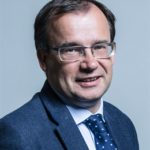
Tag: Gareth Thomas

  • Gareth Thomas – 2023 Speech on the International Day of Education

    Gareth Thomas – 2023 Speech on the International Day of Education

    The speech made by Gareth Thomas, the Labour MP for Harrow West, in Westminster Hall, the House of Commons on 26 January 2023.

    It is a real pleasure to follow the right hon. Member for Chelmsford (Vicky Ford). Much to my surprise, I found nothing in her speech to disagree with, but I promise not to make that a habit—just to reassure her and my hon. Friends. Two of the most significant points of substance that she raised were the importance of girls’ education, and investment in that, and continuing to build a global alliance for more investment in girls’ education.

    I remember that in my time as a Minister in the Department for International Development, we began the process of putting substantial investment into girls’ education. I remember how proud I was—as I am sure other Members were at the time—that Britain was willing to show global leadership on that issue. I pay tribute to Gordon Brown who, since stepping down as Prime Minister and being appointed as the UN special envoy for global education, has continued to do everything he can to build support for that.

    The right hon. Member for Chelmsford also made an important point about Afghanistan and the international community’s continuing outrage about the way in which women and, in particular, young girls are being treated there. She spoke of the need for her colleagues in the Foreign Office, if at all possible, to maintain funding for girls’ education, however difficult that is going forward.

    There is one thing that the right hon. Member for Chelmsford did not mention—I think I understand why, but she will understand why I raise it. I think it would be an even better statement on education to have a separate, dedicated Department for International Development, able to champion the case for investment in education globally, free of some of the constraints that the FCDO is under.

    I hope that the House will forgive me if I make some parochial points now about the importance of more education investment in Harrow, where we are blessed with remarkable headteachers and teachers, as well as impressive students. One of the great privileges for me as the Member for Harrow West is to have the opportunity to go into schools and see that the future of the community in which I have lived all my life and that I love very much is in the safe hands of such impressive young people.

    Nevertheless, it is clear that many of the schools still face real financial difficulties and that the governing bodies face challenges in recruiting headteachers and teachers, not least in maths and science, and also, increasingly, in other subjects, including humanities and English. I am struck by the comments of the executive heads of some of the academies that operate in Harrow about how difficult it has been on occasion to get a field of sufficiently talented applicants for the position of headteacher. As I say, they do a remarkable job none the less, but it would be good to hear from the Minister—if not today, perhaps in a letter—the Government’s plan to address the recruitment crisis in education.

    Local authorities also need more funding for special needs education, and that is certainly the case in Harrow. Mr Sharma, you may recognise that there is a continuing difficulty with the fact that teachers who are appointed to jobs in inner London get a significant pay increase compared with teachers working in outer London schools. There is little difference in the cost of living in inner London as opposed to in outer London. It seems to me that the discrepancy in pay between teachers in outer London and their compatriots in inner London, which has been around for a long time, needs addressing urgently.

    My last substantive point is that I want to encourage the Government to take a fresh look at investment in supplementary schools. We are lucky to have the Foreign Office Minister present, because she knows a lot about the Asia-Pacific tilt to which the Government are committed. I am struck by the need for us to invest in teaching the languages of Asia and the Pacific. Given the global significance of the Indian economy in years to come, it seems even sadder that we are seeing a decline in the teaching of the languages of modern India, including Gujarati, Bengali, Persian, Punjabi and Urdu. Among GCSE students in this country between 2015 and 2021, we saw a very steep decline: there was a 77% drop in the number studying GCSE Gujarati, a 66% drop in the number studying GCSE Bengali, and a 37% drop in the number studying GCSE Urdu. If we as a country want the full benefit of the trade deal that we hope to sign with India, having people who can speak the languages of that great country is essential. Too much of the teaching of those languages is left to very dedicated people in temples, mosques and Saturday schools across local communities.

    To be fair, the Government have invested in teaching modern languages. They have recently invested some £14 million in teaching Mandarin and some £5 million in teaching Latin. Why not have a similar amount of investment in teaching the languages of modern Asia? We need dedicated funding, and we need specialist training available for teachers in those subjects. Why not have a flagship school programme to back teaching in that area? Why not offer a bit of funding to support the Saturday schools that do so much to keep up the level of GCSE studies? Where is the academic research programme to support such a programme of investment in these vital community languages?

    With that, I apologise to the Front Benchers and to other Members of the House: due to childcare reasons, I cannot stay for the full debate, but I will certainly read the contributions of my hon. Friend the Member for Enfield, Southgate (Bambos Charalambous), the Minister and others.

  • Gareth Thomas – 2015 Parliamentary Question to the Foreign and Commonwealth Office

    Gareth Thomas – 2015 Parliamentary Question to the Foreign and Commonwealth Office

    The below Parliamentary question was asked by Gareth Thomas on 2015-10-29.

    To ask the Secretary of State for Foreign and Commonwealth Affairs, if he will make representations to his European counterparts encouraging them to oppose Lithuanian government plans to erect a convention centre in the Jewish cemetery in Piramont, Vilnius; and if he will make a statement.

    Mr David Lidington

    The Government is aware of plans announced by the Lithuanian Government to renovate the Soviet-era Vilnius Palace of Concerts and Sports, located in the Šnipiškės Jewish cemetery. The existing building on the site has been left derelict for some time. The Chairperson of the Jewish Community in Lithuania has been clear in her public support for the renovation, stressing that the current site is run-down and at risk otherwise of further deterioration. It is the Governement’s understanding that there will be no significant structural changes and that only the interior will be renovated for use as a centre for conferences and cultural events. The surrounding area will be maintained as a memorial park. The Lithuanian Prime Minister has said that all Jewish cemeteries in Lithuania would be memorialised and marked by the end of 2017. We welcome his commitment to working alongside the Jewish Community of Lithuania and the international Jewish community on this renovation. The Lithuanian government has also said it will discuss the renovation with the Israeli government.

  • Gareth Thomas – 2016 Parliamentary Question to the Department for International Development

    Gareth Thomas – 2016 Parliamentary Question to the Department for International Development

    The below Parliamentary question was asked by Gareth Thomas on 2016-01-08.

    To ask the Secretary of State for International Development, what steps she is taking to encourage investment in infrastructure in the north and east of Sri Lanka; and if she will make a statement.

    Mr Desmond Swayne

    DFID does not have a bilateral programme with Sri Lanka. However, the UK continues to provide assistance through a share of its contributions to multilaterals working in Sri Lanka, such as the Asian Development Bank (ADB). Inclusive growth is a major thrust of the ADB’s Sri Lanka strategy, with projects that support investment in infrastructure in the north and east of the country, as well as elsewhere.

  • Gareth Thomas – 2016 Parliamentary Question to the Cabinet Office

    Gareth Thomas – 2016 Parliamentary Question to the Cabinet Office

    The below Parliamentary question was asked by Gareth Thomas on 2016-01-26.

    To ask the Minister for the Cabinet Office, whether his Department has undertaken a value for money assessment of the National Citizen Service; and if he will make a statement.

    Mr Rob Wilson

    A value for money assessment is conducted annually as part of the independent evaluation of the National Citizen Service programme. The most recent report, covering 2014, shows a return of up to £3.98 for every £1 invested. This figure quantifies a range of benefits including the time participants spend volunteering on their social action projects. The NCS Trust estimates that participants have volunteered 8 million hours since 2011.

  • Gareth Thomas – 2016 Parliamentary Question to the Department for Education

    Gareth Thomas – 2016 Parliamentary Question to the Department for Education

    The below Parliamentary question was asked by Gareth Thomas on 2016-02-19.

    To ask the Secretary of State for Education, if she will make an assessment of the potential effect of the new grading system for GCSEs on students of Latin and Greek; and if she will make a statement.

    Nick Gibb

    This is a matter for Ofqual, the Office of Qualifications and Examinations Regulation. I have therefore asked its Chief Regulator, Glenys Stacey, to write directly to the Honourable Member. A copy of her reply will be placed in the House of Commons Library.

  • Gareth Thomas – 2016 Parliamentary Question to the Foreign and Commonwealth Office

    Gareth Thomas – 2016 Parliamentary Question to the Foreign and Commonwealth Office

    The below Parliamentary question was asked by Gareth Thomas on 2016-04-08.

    To ask the Secretary of State for Foreign and Commonwealth Affairs, what assessment he has made of the recent report by the Sri Lankan Centre for Policy Alternatives that more than 12,500 acres of land in the Northern Province remains occupied by the Sri Lankan military; what recent representations he has made to the Sri Lankan government on the restitution of land and reparations; and if he will make a statement.

    Mr Hugo Swire

    Since President Sirisena came to power in January 2015, the Sri Lankan Government has made efforts to return some military occupied private land to civilians. The UK has welcomed this. However, as the CPA report sets out, much more remains to be done. In January 2016, during my second visit in a year to Sri Lanka, I raised land returns in my meetings with the Government and reaffirmed our readiness to help it implement its commitments on reconciliation. I also met resettled families in the north, seeing for myself the progress that has been made as well as the challenges that remain. We will continue to encourage further land returns, a process the UK is contributing to through our support for demining in the north of the country.

  • Gareth Thomas – 2016 Parliamentary Question to the HM Treasury

    Gareth Thomas – 2016 Parliamentary Question to the HM Treasury

    The below Parliamentary question was asked by Gareth Thomas on 2016-05-18.

    To ask Mr Chancellor of the Exchequer, if he will conduct a consultation with small and medium-sized enterprises on potential steps to support and encourage the take up of employee share ownership schemes after the withdrawal of the valuation check service by HM Revenue and Customs on 31 March 2016; and if he will make a statement.

    Mr David Gauke

    Tax-advantaged employee share schemes are greatly valued by both companies and employers, and the government wants to make sure that the rules surrounding these schemes are as simple and clear as possible. Budget 2016 made a number of changes to the rules for employment-related securities and options which will make these schemes fairer and easier for taxpayers to understand, and therefore encourage businesses to use them.

    An HM Revenue and Customs (HMRC) commissioned report conducted by Oxera considered the effect of the tax-advantaged employee share schemes on productivity. The report is available at: http://webarchive.nationalarchives.gov.uk/20110203095056/http://www.hmrc.gov.uk/research/tax-advantaged-report2.pdf.

    The government’s most recent assessment of the cost of the tax-advantaged employee share schemes to the Exchequer is provided in the table below.

    Forecast cost of Income Tax relief (2015-16)

    Forecast cost of National Insurance relief (2015-16)

    Share Incentive Plan

    £220 million

    £165 million

    Save As You Earn

    £180 million

    £140 million

    Enterprise Management Incentives

    £70 million

    £40 million

    Company Share Option Plan

    £70 million

    £40 million

    HMRC has not withdrawn the valuation checking service for the tax-advantaged employee share schemes. However, HMRC has withdrawn other checks for non-tax advantaged schemes as, in the majority of cases, acceptable valuations were submitted. Therefore, the valuation service added no value and is seen as unnecessary.

    The government keeps all areas of the tax system under review and as part of that in always interested in understanding the views of all interested parties.

    Treasury Ministers and officials have meetings with a wide variety of organisations in the public and private sectors as part of the process of policy development and delivery. Details of ministerial and permanent secretary meetings with external organisations on departmental business are published on a quarterly basis and are available at: http://www.gov.uk/government/collections/hmt-ministers-meetings-hospitality-gifts-and-overseas-travel

  • Gareth Thomas – 2016 Parliamentary Question to the Home Office

    Gareth Thomas – 2016 Parliamentary Question to the Home Office

    The below Parliamentary question was asked by Gareth Thomas on 2016-06-07.

    To ask the Secretary of State for the Home Department, how many and what proportion of people entering or leaving the UK by air had pre-boarding electronic checks in each of the last seven years.

    Mr Robert Goodwill

    The total volumes of passengers and crew crossing the UK border via scheduled commercial air routes, along with the figures for the volumes that underwent electronic checks, are listed in the table below.

    The following table shows assessed number of passengers and crew travelling to and from the United Kingdom on commercial international aviation routes (excluding the Common Travel Area) and the percentage of those undergoing electronic checks, over the last five years. Full detail is not available for 2009/ 2010 given the events surrounding the termination of the Raytheon-led Trusted Borders contract.

    Year

    Number of passengers and crew on international scheduled commercial aviation routes (excluding Common Travel Area) travelling to and from the UK (Millions) *

    Percentage of passengers checked electronically on international scheduled commercial aviation routes (excluding Common Travel Area)

    2011

    190.4

    67%

    2012

    186.2

    69%

    2013

    182.3

    81%

    2014

    179.7

    96%

    2015

    211

    100%

  • Gareth Thomas – 2016 Parliamentary Question to the HM Treasury

    Gareth Thomas – 2016 Parliamentary Question to the HM Treasury

    The below Parliamentary question was asked by Gareth Thomas on 2016-06-09.

    To ask Mr Chancellor of the Exchequer, how many fines have been levied on credit rating agencies (a) in total and (b) for inaccurate reports of individuals’ credit records; and if he will make a statement.

    Harriett Baldwin

    This question has been passed on to the FCA. The FCA will reply to directly to the Honourable member by letter. A copy of the letter will be placed in the Library of the House.

  • Gareth Thomas – 2016 Parliamentary Question to the Department for Communities and Local Government

    Gareth Thomas – 2016 Parliamentary Question to the Department for Communities and Local Government

    The below Parliamentary question was asked by Gareth Thomas on 2016-10-10.

    To ask the Secretary of State for Communities and Local Government, what monitoring his Department undertakes of the number of homes built on surplus public land sold for housing development; and if he will make a statement.

    Gavin Barwell

    The current objective of the Public Land for Housing Programme is to release land with capacity for 160,000 much needed homes.

    Although this is the primary objective, we plan to collect data from departments to monitor the development of sites up to completion. This will include the number of homes granted planning permission for each site and when construction starts.