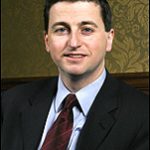
Tag: Douglas Alexander

  • Douglas Alexander – 2025 Statement on Trade Negotiations

    Douglas Alexander – 2025 Statement on Trade Negotiations

    The statement made by Douglas Alexander, the Minister for Trade Policy and Economic Security, in the House of Commons on 6 May 2025.

    I wish to make a statement on the progress that this Government have made towards a UK-India trade deal. I am delighted to inform the House that we have now concluded negotiations on a comprehensive, modern agreement with the fastest-growing economy in the G20.

    Hon. Members will no doubt be aware that India is expected to be the third-largest economy in the world by 2028. By the end of this decade, it will be home to an estimated 60 million middle-class consumers, and with trade between the United Kingdom and India already standing at north of £43 billion, we know that this powerhouse economy is and will remain a hugely important market for British businesses. While past Governments have failed to negotiate a deal with India, this Government have today succeeded. We have brokered the most generous trade deal ever agreed by India in its history.

    From day one of this deal coming into force, it will make trade between our countries cheaper, easier and quicker. UK exporters will benefit from much lower tariffs across a whole host of sectors, including those that we are prioritising in our industrial strategy. It means simplified customs processes for businesses in advanced manufacturing and aerospace, in the food and beverage sector, and in the creative sector, which will benefit from improved copyright protection.

    For our world-leading financial and professional services companies, this deal locks in access to India’s fast-growing market. It will ensure that UK banks and finance companies are placed on an equal footing with Indian suppliers, and it encourages the recognition of professional qualifications, so that UK and Indian firms can access the right talent at the right time, whether they are in Mumbai or Manchester. This deal will unlock new opportunities for businesses in every part of the United Kingdom, including our advanced manufacturing companies in the north-east, our iconic Scottish whisky brands and our car plants in the west midlands. In all, we will have secured over £400 million in tariff reductions in the first year alone, doubling to around £900 million after just 10 years.

    Crucially, the deal we have negotiated will provide bespoke support for small and medium-sized enterprises to enter the Indian market, alongside a firm commitment from India to address the trade barriers that those businesses face. Since taking office, we have committed to hardwiring the views and interests of small businesses into everything we do, and the deal we have negotiated is evidence of that. For the very first time, British businesses will have guaranteed access to India’s vast procurement market, covering goods, services and construction. They will be able to bid for approximately 40,000 tenders worth at least £38 billion a year.

    The deal that we have just got over the line is further proof that this Government are using the power of international trade and investment to raise living standards here at home. Indeed, experts predict that it will boost our bilateral trade by some £25.5 billion. It is also projected to increase UK wages by £2.2 billion each year, while adding nearly £5 billion to our GDP over the long run.

    We have done all that while defending stoutly the UK’s national interest. We have brokered a deal that protects our NHS and upholds our high food standards. It ensures that our points-based immigration system remains unaffected. The deal demonstrates our commitment to both workers and businesses, staying true to our Labour values while contributing to our primary mission of economic growth.

    I recognise that this House will need time to scrutinise the deal before the ratification process. My Department will follow the process set out in the Constitutional Reform and Governance Act 2010 in sharing the finalised treaty text with hon. Members. The House will, of course, have the opportunity to scrutinise any legislation associated with its implementation.

    This deal sends a powerful message about the UK and India’s shared commitment to free, fair and open trade. The UK-India relationship has deep, enduring roots, exemplified by the living bridge of 1.9 million people of Indian heritage living in the United Kingdom. While I do not personally lament that the right hon. Member for Richmond and Northallerton (Rishi Sunak) is no longer the UK’s Prime Minister, it would be wholly wrong of me not to acknowledge his significant achievement as the first British-Indian Prime Minister, which is a testament not just to his own ability but to the close bonds that unite our two nations.

    The Government are proud to back open markets and free trade. We recognise that Britain has always been an open, outward-looking trading nation, and we believe that open markets and free trade are fundamental building blocks with which the UK can secure its opportunities and prosperity at home and abroad. Through our upcoming trade strategy, we will set out our ambitions to engage with more industrial giants, like India, to ramp up trade and investment over the coming months and years.

    Today, though, as close trading partners and as friends, I am proud that we have secured this deal with India. It is a deal that affords UK businesses certainty and stability during a time of global uncertainty and instability, and a deal that will give British businesses access to one of our biggest markets abroad, while raising wages and driving growth here at home. That is what this deal delivers, and I commend this statement to the House.

  • Douglas Alexander – 2023 Comments on Standing for East Lothian Constituency

    Douglas Alexander – 2023 Comments on Standing for East Lothian Constituency

    The comments made by Douglas Alexander on Twitter on 12 February 2023.

    He’s running! Humbled and grateful to be overwhelmingly selected today by local party members as Scottish Labour’s candidate for East Lothian. Change is coming to our country and I’m determined to play my part by winning East Lothian back for Scottish Labour.

  • Douglas Alexander – 2014 Parliamentary Question to the Foreign and Commonwealth Office

    Douglas Alexander – 2014 Parliamentary Question to the Foreign and Commonwealth Office

    The below Parliamentary question was asked by Douglas Alexander on 2014-04-03.

    To ask the Secretary of State for Foreign and Commonwealth Affairs, whether the Cabinet Secretary was tasked with assessing whether there were gounds for a further inquiry into the events surrounding the storming of the Golden Temple in Amritsar.

    Mr William Hague

    The Cabinet Secretary Sir Jeremy Heywood’s investigation looked at why the UK provided advice to the Indian authorities, the nature of the UK assistance and the impact of that assistance in Operation Blue Star at the Golden Temple. As I told Parliament in my statement to the House on 4 February 2014, Official Report, columns 139-142, the report and the documents we published clearly show the limited nature of UK advice on Operation Blue Star, and that there were no grounds for a further inquiry.

  • Douglas Alexander – 2014 Parliamentary Question to the Foreign and Commonwealth Office

    Douglas Alexander – 2014 Parliamentary Question to the Foreign and Commonwealth Office

    The below Parliamentary question was asked by Douglas Alexander on 2014-06-09.

    To ask the Secretary of State for Foreign and Commonwealth Affairs, what role he sees for the EU in helping to facilitate Libyan parliamentary elections in July 2014.

    Mr William Hague

    The UK is firmly committed to supporting the Libyan people and Government, and I welcome the elections for the Libyan House of Representatives due on 25 June. I hope it will be conducted in a fair, transparent and accountable way which is respected by all parties. I believe that the EU, along with our international partners, can play a crucial role in supporting these elections. An EU Election Experts’ Mission monitored the Constitutional Assembly elections in February, and set out recommendations for improvements which were shared with the Libyan authorities in a report. We believe this, along with other EU programmes related to democratic transition in Libya, has laid a solid foundation to facilitate the June elections.

  • Douglas Alexander – 2014 Parliamentary Question to the Foreign and Commonwealth Office

    Douglas Alexander – 2014 Parliamentary Question to the Foreign and Commonwealth Office

    The below Parliamentary question was asked by Douglas Alexander on 2014-04-03.

    To ask the Secretary of State for Foreign and Commonwealth Affairs, which Government Minister took the decision that there were no grounds for a futher inquiry into the events in Amritsar in 1984.

    Mr William Hague

    The Cabinet Secretary, Sir Jeremy Heywood, was asked by the Prime Minister, my right hon. Friend the Member for Witney (Mr Cameron) to lead a review to establish the facts relating to the UK’s involvement in Operation Blue Star at the Golden Temple. The report was submitted to the Prime Minister and as I told Parliament in my statement to the House on 4 February 2014, Official Report, columns 139-142, it clearly showed the limited nature of UK advice on Operation Blue Star, and that there were no grounds for a further inquiry.

  • Douglas Alexander – 2014 Parliamentary Question to the Foreign and Commonwealth Office

    Douglas Alexander – 2014 Parliamentary Question to the Foreign and Commonwealth Office

    The below Parliamentary question was asked by Douglas Alexander on 2014-06-09.

    To ask the Secretary of State for Foreign and Commonwealth Affairs, what discussions he has had with the newly-elected Ukranian President about the support the UK can offer to stabilise the situation in that country.

    Mr William Hague

    The Prime Minister, my right hon. Friend the Member for Witney (Mr Cameron) spoke to President Petro Poroshenko on 29 May, when he congratulated him on his election victory and praised the Ukrainian people for their determination to hold elections in such difficult circumstances and choose their own future. I also did so when I met him on 6 June. The Prime Minister praised Mr Poroshenko’s clear messages on democracy, as well as financial and political reform, and offered his continued support in helping him to build a secure and prosperous Ukraine, through an inclusive national dialogue.

  • Douglas Alexander – 2014 Parliamentary Question to the Foreign and Commonwealth Office

    Douglas Alexander – 2014 Parliamentary Question to the Foreign and Commonwealth Office

    The below Parliamentary question was asked by Douglas Alexander on 2014-04-07.

    To ask the Secretary of State for Foreign and Commonwealth Affairs, whether he has asked President Rajapaksa of Sri Lanka to resign as Chairperson in Office of the Commonwealth in the light of the decision to investigate potential human rights abuses in Sri Lanka.

    Mr William Hague

    Any decision on the Chair-in-Office role is for all Commonwealth Heads of Government to take by consensus.

  • Douglas Alexander – 2014 Parliamentary Question to the Foreign and Commonwealth Office

    Douglas Alexander – 2014 Parliamentary Question to the Foreign and Commonwealth Office

    The below Parliamentary question was asked by Douglas Alexander on 2014-06-09.

    To ask the Secretary of State for Foreign and Commonwealth Affairs, whether he considers the existing mandate of the UN Special Envoy to Syria is sufficient.

    Mr William Hague

    The UK fully supports the role of the UN Special Representative and the efforts to bring about political transition as set out in the Geneva Communiqué. The scope of the mandate for Mr Brahimi’s successor is under consideration by the UN.

  • Douglas Alexander – 2014 Parliamentary Question to the Foreign and Commonwealth Office

    Douglas Alexander – 2014 Parliamentary Question to the Foreign and Commonwealth Office

    The below Parliamentary question was asked by Douglas Alexander on 2014-04-03.

    To ask the Secretary of State for Foreign and Commonwealth Affairs, what support the UK Government plans to provide through the EU in advance of presidential elections in Ukraine in May 2014.

    Mr William Hague

    The UK will be sending 90 short term observers, in addition to the 10 long term observers already in Ukraine, to join the observer mission being mounted by the Organisation for Security and Cooperation in Europe (OSCE) Office for Democratic Institutions and Human Rights (ODIHR). This will allow for an objective assessment as to whether the required standards are met. We also welcome the announcement by the OSCE/ODIHR that they will be providing advice and training on running elections.

  • Douglas Alexander – 2014 Parliamentary Question to the Foreign and Commonwealth Office

    Douglas Alexander – 2014 Parliamentary Question to the Foreign and Commonwealth Office

    The below Parliamentary question was asked by Douglas Alexander on 2014-04-29.

    To ask the Secretary of State for Foreign and Commonwealth Affairs, what meetings he has had with (a) representatives of the Colombian government, (b) Colombian civil society and (c) Colombian businesses to discuss his Department’s Action Plan on Business and Human Rights since its launch in September 2013.

    Mr William Hague

    I visited Colombia in February this year and discussed business and human rights in my meetings with President Santos, and in meetings with the Ministers of Foreign Affairs, Finance and Trade, and with civil society. I welcomed the development of the Colombian national policy on business and human rights during these meetings and raised the importance of protecting Trade Unionists and human rights defenders. We have a strong partnership with the government of Colombia on implementation of the UN Guiding Principles on Business and Human Rights, in the context of the November 2011 Joint Declaration on Human Rights by the Prime Minister and President Santos.

    In addition, British Embassy officials in Bogota have had several meetings with the Colombian government, civil society and businesses in Colombia to discuss the UK Action plan on business and human rights in line with our commitment to working for widespread international uptake of the UN Guiding Principles and to developing partnerships with other countries to progress this.

    Last year, the Foreign and Commonwealth Office funded a project to assist Colombia in drafting its national policy. The Colombian public policy on business and human rights has been formed as a result of consultation across 33 regions and involving over 19,000 people.