Category: Foreign Affairs

  • Keir Starmer – 2025 Statement on the Release of the Bodies of the Deceased Hostages

    Keir Starmer – 2025 Statement on the Release of the Bodies of the Deceased Hostages

    The statement made by Keir Starmer, the Prime Minister, on 14 October 2025.

    The release of the bodies of the deceased hostages is a profoundly difficult moment for the families who have endured terrible and protracted pain over the last two years at the hands of Hamas. The loss of Yossi Sharabi will be felt deeply by his family, after Hamas so cruelly drew out their horror and denied them the right to grieve. 

    I know from meeting his family just how loved Yossi was, and how devastating this ordeal has been. My thoughts are with them, and all of the hostage families.

    Hamas must now return the remaining deceased hostages and honour the terms of the ceasefire. Moving forward, we will continue to work with our partners to ensure the next phase of the peace plan is implemented in full.

  • Keir Starmer – 2025 Statement on the Release of Hostages by Hamas

    Keir Starmer – 2025 Statement on the Release of Hostages by Hamas

    The statement made by Keir Starmer, the Prime Minister, on 13 October 2025.

    I share the deep feeling of relief as Avinatan Or and other hostages are released today. But this is also a stark reminder of the treatment that he has been subject to at the hands of Hamas, and the atrocities that shook the world two years ago. 

    Having met his family, I know that no one can truly understand the torture and agony they suffered for two drawn out years and my thoughts are with them. My thoughts are also with the family of Yossi Sharabi, who are still waiting for news. 

    I reiterate my thanks for the tireless diplomatic efforts of the United States, Egypt, Qatar and Türkiye. It is now crucial that we work together to implement President Trump’s peace plan for Gaza, and that will be my focus in Egypt today.

    Commitment to this plan from all parties will be essential to ending the war and building the foundations for a sustainable path to a long-term peace. The UK will support the crucial next stage of talks to ensure the implementation of the peace plan.

  • Hamish Falconer – 2025 Speech at Wilton Park Conference

    Hamish Falconer – 2025 Speech at Wilton Park Conference

    The speech made by Hamish Falconer, the Minister for the Middle East, at Wilton Park on 13 October 2025.

    Excellencies, colleagues, friends,

    Welcome to Wilton Park, and thanks to those who’ve travelled so far to be here.

    It’s a privilege for the UK to host this gathering – at such a pivotal moment – alongside our friends from the Palestinian Authority and Egypt.

    This peace deal brings hope to the world, after two years of conflict and suffering.

    I want to pay my respects to every innocent person who has faced fear, hardship and loss.

    Now, finally, we can begin to look forward to a brighter future – for Palestinians, for Israelis, for the Palestinian State and for the Two-State Solution.

    We commend the key negotiators from the United States, Qatar, Egypt and Türkiye for finding a way through and for starting to build the foundations of peace.

    The UK is committed to playing a leading role in accelerating Gaza’s reconstruction, working with you, our international partners.

    Together, we are backing a Palestinian-led recovery and reconstruction.

    We know the scale of the task. We know how urgent it is, and how complex it will be. The government has said it will take years and cost billions.

    We must be ready to act – to clear rubble, rebuild homes and set up infrastructure, restoring access to education and healthcare.

    And we must also lay the groundwork for long-term economic development.

    Gaza, and Palestine more broadly, has real economic potential. Human capital, resilience, a critical location and a global diaspora, including here in the UK. That potential must be unlocked.

    This conference is about how we do that, together. How we support the Arab Reconstruction Plan. And how we unlock the vast resources needed, not just through traditional donor finance, but by thinking creatively to bring in private capital.

    The UK is well placed to help. We bring deep expertise in private investment and strong links to the City of London. But this is a shared effort. You bring the technical expertise, the regional insight and the relationships that will make this happen.

    This is ultimately about meeting the needs and ambitions of Gazans.

    It’s also about reconnecting Gaza and the West Bank, economically, politically, socially. And supporting the viability of a Palestinian state as part of a Two-State Solution.

    I want to thank all our Palestinian participants for joining us. We know what you and your communities have endured. I know the experience and insight you bring will play a crucial role in achieving our goals.

    I also want to thank our partners from Europe, the Arab region, investment funds and development institutions. Your engagement will shape what’s possible.

    I very much look forward to our discussions today and the outcomes of this conference.

    Together, let’s seize the opportunity to turn this moment of hope into lasting peace and progress.

  • Keir Starmer – 2025 Statement in India

    Keir Starmer – 2025 Statement in India

    The statement made by Keir Starmer, the Prime Minister, on 9 October 2025.

    Namaskar doston. Prime Minister Modi, it was an honour for me to host you in the United Kingdom in July at Chequers, and I am so delighted to be making this return visit just a few short months later. And can I just extend my thanks to the very warm welcome that you and the whole country extended to me as Prime Minister, to the whole delegation and through us, to the whole of the United Kingdom. 

    It is very much appreciated, very much noticed, and it is an important statement as we stand here, about our shared commitment to this special relationship. Because we are building something here, we are creating a new, modern partnership focused on the future and on winning the opportunities that it offers, and we’re doing it together. And that’s why we struck the UK-India Comprehensive Economic and Trade Agreement in July. A breakthrough moment, years in the making. Slashing tariffs, increasing access to each other’s markets to drive growth and create jobs for our people and making life better in both of our nations. 

    Beyond the words on the page of the agreement is the spirit and the confidence that that has given to our two great countries to work even more closely together, something which we’ve seen evidence during the course of this visit here over the last two days. 

    It is significant that we’re meeting here in Mumbai as India’s economic and financial capital, because India’s growth story is remarkable. I want to congratulate the Prime Minister on his leadership, aiming to be the world’s third largest economy by 2028. And your vision of Viksit Bharat is a completely developed country by 2047, and everything I’ve seen since I’ve been here is absolute proof to me that you’re on track to succeeding in that. So we want to be partners on that journey, and my visit this week is about doubling down on the potential of our trade deal for the benefit of all of us, and that’s why I brought a record 126 British businesses with me to India this week. We had to get a bigger plane to travel over here than the one we planned, but that delegation is some of our biggest, most iconic businesses, and smaller and medium sized businesses, but also leaders from education, some of whom are with us here, and sport and the arts. 

    As I say, our largest trade delegation for a decade, and so my first as Prime Minister, so of course, the destination for that had to be here, had to be India. Later today, the Prime Minister and I will convene a renewed CEO forum, and that was much discussed yesterday as a direct channel for business. There was a real buzz in the room yesterday that this forum is going to have real life breathed into it to embody the agreement that we’ve already reached to ensure that the deal does deliver the opportunities that we want to see. And we are committed to that, and when we leave India later on tonight I expect that we will have secured major new investments creating thousands of high-skilled jobs in the sectors of the future for both of our nations. 

    The UK and India stand side by side as global leaders in tech and innovation, and so we’ve also taken the opportunity to deepen our cooperation through our Technology Security Initiative with new commitments on AI, advanced communication, defence technologies and much, much more. We’re announcing a deal to make Bollywood films in the United Kingdom after a fantastic visit to the studio yesterday. And we’re deepening our cooperation in education as we’ve evidenced here on the film and with the people that we have in the room. It is the younger generation in India who will lead the charge to deliver on that 2047 target. The demand for the best quality higher education is very high, so I’m really pleased that we’re announcing today that all British universities will be setting up campuses right here in India, making Britain India’s leading international provider of higher education and delivering on our Vision 2035 that we set out in July. 

    These incredible economic bonds are the jewel in the crown of this relationship, but of course, our cooperation goes much wider too, and so we’ve had the opportunity to discuss issues of vital importance to global stability and security, including the situation in the Middle East. I strongly welcome the news that a deal has been reached on the first stage of the peace plan in Gaza. This is a moment of profound relief that we felt around the world, but particularly for the hostages, their families and for the civilian population of Gaza who have all endured unimaginable suffering over the last two years. I’m grateful for the tireless diplomatic efforts of Egypt, Qatar, Türkiye, United States and many others in securing this crucial first step. 

    This agreement must now be implemented in full, without delay and be accompanied by the immediate lifting of all restrictions on life saving humanitarian aid to Gaza. The UK will support these crucial immediate steps and the next stages of the talks to ensure the full implementation of the peace plan. 

    The Prime Minister and I also discussed the need for a just and lasting peace in Ukraine, the need for stability and security in the Indo-Pacific, and the need to cooperate in critical areas like climate and energy, including breaking away from dependence on fossil fuels. 

    India is a global player. We sit together in the Commonwealth, the G20, and we want to see India taking its rightful place on the UN Security Council too, so we are committed to strengthening our strategic partnership and in fact has already been mentioned, our carrier strike group is, is here in India right now exercising with the Indian Navy, showing the strength of that relationship on defence and security which we’ve discussed this morning we want to take even further. 

    And look, the whole thing, this particular partnership, goes much deeper because in the end it is about people. The human connections between India and the UK are unique, forming what Prime Minister Modi has called the living bridge between our two countries. A bridge between people, a bridge between hearts, and in that spirit Prime Minister, I want to express my deepest sympathies to all the victims of the Air India crash earlier this year. A terrible day and a tragedy for both of our nations, and it showed, frankly, that we are family. 

    And I am proud this week that we are taking this incredible partnership between our two nations and making it stronger than ever for working people on both sides of that bridge. Finally, I’d like to take this opportunity, as we enter the festive period, to wish the people of India joy and happiness and a very happy Diwali. Diwali ki shubhkamnayein. Thank you.

  • Keir Starmer – 2025 Comments to Press at UK Trade Mission to India

    Keir Starmer – 2025 Comments to Press at UK Trade Mission to India

    The comments made by Keir Starmer, the Prime Minister, in India on 9 October 2025.

    Back in July – together with Prime Minister Modi – I signed the historic UK and India Comprehensive Economic and Trade Agreement.

    It is a huge deal for the United Kingdom. The most ambitious trade deal India has ever done. And, like our deals with the US and the EU, people said it would never happen. They said it couldn’t be done.

    But we did it. Because of this government’s approach: outward facing, proud, and determined to deliver for Britain.

    And as a result we are opening up new opportunities in India for British businesses. Opportunities that other countries simply do not have. It has given us a unique edge.

    So I have come here this week, leading our biggest trade delegation to India ever to follow through on this deal. 

    That means 126 CEOs, tech entrepreneurs, SMEs, Vice-Chancellors, sports and cultural leaders all here with me to seize the incredible benefits that this deal offers for the British people.

    The opportunity is clear. Just look at the sheer scale of India: the world’s largest democracy, on track to become third largest economy by 2028, an economic superpower in the making. And we are perfectly placed to be partners on that journey.

    We want to build the sectors and the skills of the future together. So this trade deal is a launchpad to boost British leadership in everything from tech, to life sciences, to renewable energy, and much more beyond that.

    And we have seized these opportunities in full this week – delivering real results for the British people, securing new investments into the UK worth £1.3 billion, and creating 10,600 jobs.

    That is remarkable. It includes 1,500 jobs in the North West, over 1,000 across the midlands, 200 in Yorkshire and the Humber, and 700 in Northern Ireland.

    Great jobs – in advanced engineering, in defence, in car production, film making and technology. Delivering real change that people will see in their communities up and down the country. And that’s what this is all about.

    And what we’re doing together in tech is a great example. The UK is one of only three countries in the world with a trillion-dollar tech sector. India is poised to be the fourth. We are both top four AI powers, and we’re taking this opportunity to go further. 

    We’re deepening the UK-India Technology Security Initiative to boost opportunities for great British companies and deliver dozens of new investments into the United Kingdom.

    Harnessing tech as one of the biggest engines we have for jobs and growth. Other stand-out wins this week have come in filmmaking, with the announcement that three new Bollywood blockbusters will be made in the United Kingdom.

    And in education, with the announcement today that the University of Lancaster and the University of Surrey will open new campuses in India – joining other British universities setting up here and making the UK India’s top international education provider.

    So we are out there, leading the way and winning these opportunities for our country. Because, the fact is, this relationship matters more than ever.

    Across the economy, security, energy, climate and more. Our history together is deep, the human connections between our people are truly special. So this week we have built on all that.

    Building on our historic trade deal, we are remaking this partnership for our times, forward facing, focused on winning the opportunities of the future, together, and bringing them home for the British people.

    Now before I open for questions, I want to strongly welcome the news that a deal has been reached on the first stage of President Trump’s peace plan for Gaza.

    This will come as a profound relief for the hostages and their families, and the civilian population in Gaza, and for the whole world. And we will now work with our partners to ensure this deal is implemented in full and without delay.

    Thank you.

  • Keir Starmer – 2025 Statement on the Gaza Peace Deal

    Keir Starmer – 2025 Statement on the Gaza Peace Deal

    The statement made by Keir Starmer, the Prime Minister, on 9 October 2025.

    I welcome the news that a deal has been reached on the first stage of President Trump’s peace plan for Gaza.

    This is a moment of profound relief that will be felt all around the world, but particularly for the hostages, their families, and for the civilian population of Gaza, who have all endured unimaginable suffering over the last two years. 

    I am grateful for the tireless diplomatic efforts of Egypt, Qatar, Türkiye and the United States, supported by our regional partners, in securing this crucial first step. This agreement must now be implemented in full, without delay, and accompanied by the immediate lifting of all restrictions on life-saving humanitarian aid to Gaza.

    We call on all parties to meet the commitments they have made, to end the war, and to build the foundations for a just and lasting end to the conflict and a sustainable path to a long-term peace. The UK will support these crucial immediate steps and the next stage of talks to ensure the full implementation of the peace plan.

  • Keir Starmer – 2025 Statement on the Middle East

    Keir Starmer – 2025 Statement on the Middle East

    The statement made by Keir Starmer, the Prime Minister, on 4 October 2025.

    Hamas’ acceptance of the US peace plan is a significant step forwards. We strongly support President Trump’s efforts, which have brought us closer to peace than ever before.

    There is now an opportunity to end the fighting, for the hostages to return home, and for humanitarian aid to reach those who so desperately need it. We call on all sides to implement the agreement without delay.

    The UK, alongside our partners, stands ready to support further negotiations and to work towards sustainable peace for Israelis and Palestinians alike.

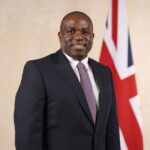
  • David Lammy – 2025 Speech at the UN on Using AI to Strengthen Peace

    David Lammy – 2025 Speech at the UN on Using AI to Strengthen Peace

    The speech made by David Lammy, the Deputy Prime Minister, in New York on 24 September 2025.

    There is an urgency to this debate. 

    It was two years ago that the United Kingdom first brought artificial intelligence to this Council.

    And since that time, its capabilities have grown exponentially. 

    This is a lightning strike of change.  

    Every one of us, diplomat, peacebuilder, terrorist, now carries superhuman expertise in our smartphones, better at maths, better at translation, better at diagnosis, than almost any human expert.  

    And now, superintelligence is on the horizon, able to operate, coordinate, and act on our behalf. 

    We are staring at a technological frontier of astounding promise and power.  

    No aspect of life, war, or peace will escape.  

    Deep AI analysis of situational data holds this promise for peacekeeping: 

    Ultra-accurate real-time logistics. 

    Ultra-accurate real-time sentiment analysis. 

    Ultra-early warning systems.

    But there are also these challenges for armed conflict:  

    Ultra novel chemical and biological weapons, ultra accessible to malign actors.

    And ultra rampant distortion and disinformation. 

     And, of course, this is what is at stake for our shared security:

    The risk of miscalculation.

    The risk of unintended escalation. 

    And the arrival of artificial intelligence-powered chatbots stirring conflict.

     The risk of deeper instability is immense.

    And this is why I so welcome the Secretary-General’s report on military AI. 

    This is an opportunity for collective understanding.

     For us to build new safeguards and guardrails.

    And reaffirm international law as the bedrock of responsible use. 

    We all know that artificial intelligence use is growing, of course, exponentially, offering us both extraordinary promise and intense challenges.

     Nowhere is this clearer than in climate.  

    On current trends, artificial intelligence could add the equivalent of a new Japan to world electricity consumption.  

    Yet, it also promises to utterly transform efficiency and power our green transitions, fine-tuning electrical production to the minute to meet demand and eliminating astonishing levels of waste. 

    This is the power of AI. 

    We are crossing humanity’s most profound technological frontier.  

    Our lives, our world, our politics are about to be flooded with super-powerful AI.  

    There is only one way forward. 

    Resilience. 

    Learning how to use these tools and embedding them safely in society.

    This is the United Kingdom’s mission.

    Through our AI Security Institute, with more dedicated researchers than anywhere else in the world, and through the International AI Safety Report, with its secretariat based in the UK.

    Under the chairmanship of Yoshua Bengio, one of our briefers today.

    The United Kingdom is committed to using AI responsibly.

    Safely, legally, and ethically.

    And together, here at the United Nations, we must ensure AI strengthens peace and security.

    I believe that it can.

    And if we act together, we can get there.

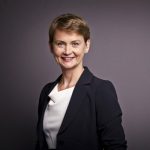
  • Yvette Cooper – 2025 Speech at the UN Security Council Meeting on Ukraine

    Yvette Cooper – 2025 Speech at the UN Security Council Meeting on Ukraine

    The speech made by Yvette Cooper, the Foreign Secretary, at the UN Security Council Meeting held in New York on 23 September 2025.

    Thank you, Mr. President. Thank you to the Secretary General for his briefing, and thank you to President Zelenskyy and Minister Sybiha. The United Kingdom commends you for your leadership and your determination.

    Thank you too for welcoming me to Kyiv two weeks ago, where I saw first-hand the impact of Russia’s brutal war and I met families whose lives had been uprooted, their homes destroyed, their children’s education torn apart.

    But as Putin cynically stalls on peace, I also saw a nation resolute in its fight, and I saw the strength and the courage of the Ukrainian people, the soldiers, civilians, the mothers and fathers, first responders, health care workers, who are standing up to defend their homes and their land.

    Russia’s illegal and unprovoked war of aggression is not just a test of Ukrainian resilience and security, it is an assault on the United Nations Charter and its most foundational principles: respect for sovereignty and for territorial integrity, principles on which we all depend every day and feel acutely whenever they are threatened. And it is an assault on the UN Charter by a member of this Security Council.

    President Zelenskyy has made clear that he wants peace and wants this war to end, that he and Ukraine have supported a full unconditional ceasefire and reaffirmed his readiness to meet President Putin.

    Alongside European partners, the US and President Trump are working to support a peace process, but Putin continues to choose war. He has rejected calls for a meaningful ceasefire. He has refused even to meet President Zelenskyy in a neutral venue.

    And Putin’s strategy includes the forced deportation, indoctrination, and militarisation of children. It includes the intensifying of targets against civilians, strikes on Ukrainian cities and critical infrastructure on families as they sleep in their beds at night.

    Civilian casualties have risen nearly 40% with children killed in playgrounds, diplomatic premises and government buildings damaged, hospitals and schools destroyed. And these are not accidents of war. They are the result of a cruel strategy targeting the people and communities of Ukraine.

    But anyone who knows Ukrainians knows that this will never succeed because their determination to hold on to their freedom to protect their families, their nation far exceeds Russia’s ability to take those things away.

    And indeed, what we have seen is Ukraine repeatedly, repeatedly, undermine Russia’s military goals, so that despite the huge Russian mobilisation attempts in the last three years, their overall impact on their military goals has been minimal.

    In this war that they started, their losses are now 20 times higher than were Soviet losses in Afghanistan.

    In this war that they are continuing to pursue, they’re struggling to recruit, and in some areas, their stocks are so low they have resorted to using military equipment from the 1950s.

    What is this for? Because, as Ukraine stands firm against Russia, the United Kingdom stands firm with Ukraine. We know that Ukraine’s security is our security, and all of us depend on upholding the UN Charter.

    We know that Russia exports interference, disinformation and instability, well beyond Ukraine. From cyber-attacks in Moldova to the deployment of mercenaries in the Sahel, Russia’s actions seek to undermine democracies, fuel conflict and spread instability far beyond Europe’s borders.

    And in recent weeks, we’ve seen provocative and reckless violations of NATO airspace in Estonia, Poland and Romania, against which NATO stands firm, and we will be ready to act.

    So the UK will continue to stand with Ukraine, providing the support it needs to defend itself now and to rebuild in the future. Rebuilding as a strong, prosperous nation, free to make its own choices.

    And so, I say to the representative of the Russian Federation, we will target your ailing economy, your oil and gas revenues that are paying for this war, the defence industry making your munitions and weapons, because we know for Russia, the price of war is piling up and the sanctions are tightening the screws.

    Falling energy revenues are squeezing the state budget, and oil revenues are now at a five-year low, but we will go further. Be in no doubt.

    And to our Ukrainian friends, I say you have the UK’s unwavering support now and for decades to come.

    And to this Council, I simply offer a reminder that 80 years ago, our predecessors came together as United Nations to save succeeding generations from the scourge of war. That mission remains as noble today as it was in 1945.

    Each generation is tested anew, and we must rise to this test for Ukraine and for us all. Thank you.
  • Yvette Cooper – 2025 Speech on Violence Against Women

    Yvette Cooper – 2025 Speech on Violence Against Women

    The speech made by Yvette Cooper, the Foreign Secretary, at the United Nations in New York, United States on 22 September 2025.

    I am honoured to join you today as the United Kingdom’s new Foreign Secretary.

    And to be here too, alongside the UK’s trailblazing Special Envoy for Women and Girls, Baroness Harriet Harman, who gave me one of my first jobs in politics more than 30 years ago, including research on women’s equality, not long before the Beijing Declaration was adopted.

    I remember at that time just how significant it felt to see countries coming together, from across the globe, committed to advancing women’s equality and women’s rights.

    So it is particularly special to be here three decades on to discuss an issue that has been so close to my heart since, and to be clear that this will be a priority for me now, in this role. 

    Supporting women across the globe, on leadership, on representation, on access to education and economic opportunity. 

    An agenda set by women, and supported by male allies, who are vital partners for progress. 

    But I particularly want to draw attention to the topic of Violence Against Women and Girls.

    Because we know that safety and security are the bedrock on which all opportunities in our lives are built. Women’s safety is an essential foundation for women’s equality.

    And while individual nations and UN agencies have helped to achieve great strides forward, with FGM and forced marriage less prevalent than they were three decades ago.

    The facts should still shame us all.

    Across the globe, 1 in 3 women will be beaten or sexually assaulted in their lifetime. 

    140 women and girls are killed every day by a partner or close relative. 

    And rape and sexual violence continue to be used as a weapon of war. 

    My Government has described violence against women and girls in the UK as a national emergency, and we have set out an unprecedented mission to halve it in a decade.

    But the truth is that this is an international emergency too.

    So today I make two calls for action.

    First, that we step up our efforts to eliminate violence against women and girls, because everyone has the right to live in freedom from fear. 

    Including challenging new forms of abuse and collaborating against devastating sexual abuse of children online.

    And second, we must ensure that the multilateral system remains a powerful force for the rights and equality of women and girls everywhere because we know that by doing so, we also strengthen our families, our communities, our economies and our nations too.