Category: Foreign Affairs

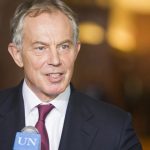
  • Tony Blair – 2006 Speech on Foreign Affairs

    Tony Blair – 2006 Speech on Foreign Affairs

    The speech made by Tony Blair, the then Prime Minister, in London on 21 March 2006.

    Over these past nine years, Britain has pursued a markedly different foreign policy. We have been strongly activist, justifying our actions, even if not always successfully, at least as much by reference to values as interests. We have constructed a foreign policy agenda that has sought to link, in values, military action in Kosovo, Sierra Leone, Afghanistan and Iraq with diplomatic action on climate change, world trade, Africa and Palestine. I set out the basis for this in the Chicago speech of 1999 where I called for a doctrine of international community, and again in the speech to the US Congress in July 2003.

    The basic thesis is that the defining characteristic of today’s world is its interdependence; that whereas the economics of globalisation are well matured, the politics of globalisation are not; and that unless we articulate a common global policy based on common values, we risk chaos threatening our stability, economic and political, through letting extremism, conflict or injustice go unchecked.

    The consequence of this thesis is a policy of engagement not isolation; and one that is active not reactive.

    Confusingly, its proponents and opponents come from all sides of the political spectrum. So it is apparently a “neo-conservative” ie right wing view, to be ardently in favour of spreading democracy round the world; whilst others on the right take the view that this is dangerous and deluded – the only thing that matters is an immediate view of national interest. Some progressives see intervention as humanitarian and necessary; others take the view that provided dictators don’t threaten our citizens directly, what they do with their own, is up to them.

    The debate on world trade has thrown all sides into an orgy of political cross-dressing. Protectionist sentiment is rife on the left; on the right, there are calls for “economic patriotism”; meanwhile some voices left and right, are making the case for free trade not just on grounds of commerce but of justice.

    The true division in foreign policy today is between: those who want the shop “open”, or those who want it “closed”; those who believe that the long-term interests of a country lie in it being out there, engaged, interactive and those who think the short-term pain of such a policy and its decisions, too great. This division has strong echoes in debates not just over foreign policy and trade but also over immigration.

    Progressives may implement policy differently from conservatives, but the fault lines are the same.

    Where progressive and conservative policy can differ is that progressives are stronger on the challenges of poverty, climate change and trade justice. I have no doubt at all it is impossible to gain support for our values, unless the demand for justice is as strong as the demand for freedom; and the willingness to work in partnership with others is an avowed preference to going it alone, even if that may sometimes be necessary.

    I believe we will not ever get real support for the tough action that may well be essential to safeguard our way of life; unless we also attack global poverty and environmental degradation or injustice with equal vigour.

    Neither in defending this interventionist policy do I pretend that mistakes have not been made or that major problems do not confront us and there are many areas in which we have not intervened as effectively as I would wish, even if only by political pressure. Sudan, for example; the appalling deterioration in the conditions of the people of Zimbabwe; human rights in Burma; the virtual enslavement of the people of North Korea.

    I also acknowledge – and shall at a later time expand on this point – that the state of the MEPP and the stand-off between Israel and Palestine remains a, perhaps the, real, genuine source of anger in the Arab and Muslim world that goes far beyond usual anti-western feeling. The issue of “even handedness” rankles deeply. I will set out later how we should respond to Hamas in a way that acknowledges its democratic mandate but seeks to make progress peacefully.

    So this is not an attempt to deflect criticism or ignore the huge challenges which remain; but to set out the thinking behind the foreign policy we have pursued.

    Over the next few weeks, I will outline the implication of this agenda in three speeches, including this one. In this, the first, I will describe how I believe we can defeat global terrorism and why I believe victory for democracy in Iraq and Afghanistan is a vital element of doing that. In the second, I shall outline the importance of a broad global alliance to achieve our common goals. In the third, in America, I shall say how the international institutions need radical reform to make them capable of implementing such an agenda, in a strong and effective multilateral way. But throughout all three, I want to stress why this concept of an international community, based on core, shared values, prepared actively to intervene and resolve problems, is an essential pre-condition of our future prosperity and stability.

    It is in confronting global terrorism today that the sharpest debate and disagreement is found. Nowhere is the supposed “folly” of the interventionist case so loudly trumpeted as in this case. Here, so it is said, as the third anniversary of the Iraq conflict takes place, is the wreckage of such a world view. Under Saddam Iraq was “stable”. Now its stability is in the balance. Ergo, it should never have been done.

    This is essentially the product of the conventional view of foreign policy since the fall of the Berlin Wall. This view holds that there is no longer a defining issue in foreign policy. Countries should therefore manage their affairs and relationships according to their narrow national interests. The basic posture represented by this view is: not to provoke, to keep all as settled as it can be and cause no tectonic plates to move. It has its soft face in dealing with issues like global warming or Africa; and reserves its hard face only if directly attacked by another state, which is unlikely. It is a view which sees the world as not without challenge but basically calm, with a few nasty things lurking in deep waters, which it is best to avoid; but no major currents that inevitably threaten its placid surface. It believes the storms have been largely self-created.

    This is the majority view of a large part of western opinion, certainly in Europe. According to this opinion, the policy of America since 9/11 has been a gross overreaction; George Bush is as much if not more of a threat to world peace as Osama bin Laden; and what is happening in Iraq, Afghanistan or anywhere else in the Middle East, is an entirely understandable consequence of US/UK imperialism or worse, of just plain stupidity. Leave it all alone or at least treat it with sensitivity and it would all resolve itself in time; “it” never quite being defined, but just generally felt as anything that causes disruption.

    This world view – which I would characterise as a doctrine of benign inactivity – sits in the commentator’s seat, almost as a matter of principle. It has imposed a paradigm on world events that is extraordinary in its attraction and its scope. As we speak, Iraq is facing a crucial moment in its history: to unify and progress, under a government elected by its people for the first time in half a century; or to descend into sectarian strife, bringing a return to certain misery for millions. In Afghanistan, the same life choice for a nation, is being played out. And in many Arab and Muslim states, similar, though less publicised, struggles for democracy dominate their politics.

    The effect of this paradigm is to see each setback in Iraq or Afghanistan, each revolting terrorist barbarity, each reverse for the forces of democracy or advance for the forces of tyranny as merely an illustration of the foolishness of our ever being there; as a reason why Saddam should have been left in place or the Taliban free to continue their alliance with Al Qaida. Those who still justify the interventions are treated with scorn.

    Then, when terrorists strike in the nations like Britain or Spain, who supported such action, there is a groundswell of opinion formers keen to say, in effect, that it’s hardly surprising – after all, if we do this to “their” countries, is it any wonder they do it to “ours”?

    So the statement that Iraq or Afghanistan or Palestine or indeed Chechnya, Kashmir or half a dozen other troublespots is seen by extremists as fertile ground for their recruiting – a statement of the obvious – is elided with the notion that we have “caused” such recruitment or made terrorism worse, a notion that, on any sane analysis, has the most profound implications for democracy.

    The easiest line for any politician seeking office in the West today is to attack American policy. A couple of weeks ago as I was addressing young Slovak students, one got up, denouncing US/UK policy in Iraq, fully bought in to the demonisation of the US, utterly oblivious to the fact that without the US and the liberation of his country, he would have been unable to ask such a question, let alone get an answer to it.

    There is an interesting debate going on inside government today about how to counter extremism in British communities. Ministers have been advised never to use the term “Islamist extremist”. It will give offence. It is true. It will. There are those – perfectly decent-minded people – who say the extremists who commit these acts of terrorism are not true Muslims. And, of course, they are right. They are no more proper Muslims than the Protestant bigot who murders a Catholic in Northern Ireland is a proper Christian. But, unfortunately, he is still a “Protestant” bigot. To say his religion is irrelevant is both completely to misunderstand his motive and to refuse to face up to the strain of extremism within his religion that has given rise to it.

    Yet, in respect of radical Islam, the paradigm insists that to say what is true, is to provoke, to show insensitivity, to demonstrate the same qualities of purblind ignorance that leads us to suppose that Muslims view democracy or liberty in the same way we do.

    Just as it lets go unchallenged the frequent refrain that it is to be expected that Muslim opinion will react violently to the invasion of Iraq: after all it is a Muslim country. Thus, the attitude is: we understand your sense of grievance; we acknowledge your anger at the invasion of a Muslim country; but to strike back through terrorism is wrong.

    It is a posture of weakness, defeatism and most of all, deeply insulting to every Muslim who believes in freedom ie the majority. Instead of challenging the extremism, this attitude panders to it and therefore instead of choking it, feeds its growth.

    None of this means, incidentally, that the invasion of Iraq or Afghanistan was right; merely that it is nonsense to suggest it was done because the countries are Muslim.

    I recall the video footage of Mohammed Sadiq Khan, the man who was the ringleader of the 7/7 bombers. There he was, complaining about the suppression of Muslims, the wickedness of America and Britain, calling on all fellow Muslims to fight us. And I thought: here is someone, brought up in this country, free to practise his religion, free to speak out, free to vote, with a good standard of living and every chance to raise a family in a decent way of life, talking about “us”, the British, when his whole experience of “us” has been the very opposite of the message he is preaching. And in so far as he is angry about Muslims in Iraq or Afghanistan let Iraqi or Afghan Muslims decide whether to be angry or not by ballot.

    There was something tragic, terrible but also ridiculous about such a diatribe. He may have been born here. But his ideology wasn’t. And that is why it has to be taken on, everywhere.

    This terrorism will not be defeated until its ideas, the poison that warps the minds of its adherents, are confronted, head-on, in their essence, at their core. By this I don’t mean telling them terrorism is wrong. I mean telling them their attitude to America is absurd; their concept of governance pre-feudal; their positions on women and other faiths, reactionary and regressive; and then since only by Muslims can this be done: standing up for and supporting those within Islam who will tell them all of this but more, namely that the extremist view of Islam is not just theologically backward but completely contrary to the spirit and teaching of the Koran.

    But in order to do this, we must reject the thought that somehow we are the authors of our own distress; that if only we altered this decision or that, the extremism would fade away. The only way to win is: to recognise this phenomenon is a global ideology; to see all areas, in which it operates, as linked; and to defeat it by values and ideas set in opposition to those of the terrorists.

    The roots of global terrorism and extremism are indeed deep. They reach right down through decades of alienation, victimhood and political oppression in the Arab and Muslim world. Yet this is not and never has been inevitable. The most remarkable thing about reading the Koran – in so far as it can be truly translated from the original Arabic – is to understand how progressive it is. I speak with great diffidence and humility as a member of another faith. I am not qualified to make any judgements. But as an outsider, the Koran strikes me as a reforming book, trying to return Judaism and Christianity to their origins, rather as reformers attempted with the Christian Church centuries later. It is inclusive. It extols science and knowledge and abhors superstition. It is practical and way ahead of its time in attitudes to marriage, women and governance.

    Under its guidance, the spread of Islam and its dominance over previously Christian or pagan lands was breathtaking. Over centuries it founded an Empire, leading the world in discovery, art and culture. The standard bearers of tolerance in the early Middle Ages were far more likely to be found in Muslim lands than in Christian.

    This is not the place to digress into a history of what subsequently happened. But by the early 20th century, after renaissance, reformation and enlightenment had swept over the Western world, the Muslim and Arab world was uncertain, insecure and on the defensive. Some countries like Turkey went for a muscular move to secularism. Others found themselves caught between colonisation, nascent nationalism, political oppression and religious radicalism. Muslims began to see the sorry state of Muslim countries as symptomatic of the sorry state of Islam. Political radicals became religious radicals and vice versa. Those in power tried to accommodate the resurgent Islamic radicalism by incorporating some of its leaders and some of its ideology. The result was nearly always disastrous. The religious radicalism was made respectable; the political radicalism suppressed and so in the minds of many, the cause of the two came together to symbolise the need for change. So many came to believe that the way of restoring the confidence and stability of Islam was the combination of religious extremism and populist politics.

    The true enemies became “the West” and those Islamic leaders who co-operated with them.

    The extremism may have started through religious doctrine and thought. But soon, in offshoots of the Muslim brotherhood, supported by Wahabi extremists and taught in some of the Madrassas of the Middle East and Asia, an ideology was born and exported around the world.

    The worst terrorist act was 9/11 in New York and Washington DC in 2001, where three thousand people were murdered. But the reality is that many more had already died not just in acts of terrorism against Western interests, but in political insurrection and turmoil round the world. Over 100,000 died in Algeria. In Chechnya and Kashmir political causes that could have been resolved became brutally incapable of resolution under the pressure of terrorism. Today, in well over 30 or 40 countries terrorists are plotting action loosely linked with this ideology. Its roots are not superficial, therefore, they are deep, embedded now in the culture of many nations and capable of an eruption at any time.

    The different aspects of this terrorism are linked. The struggle against terrorism in Madrid or London or Paris is the same as the struggle against the terrorist acts of Hezbollah in Lebanon or the PIJ in Palestine or rejectionist groups in Iraq. The murder of the innocent in Beslan is part of the same ideology that takes innocent lives in Saudi Arabia, the Yemen or Libya. And when Iran gives support to such terrorism, it becomes part of the same battle with the same ideology at its heart.

    True the conventional view is that, for example, Iran is hostile to Al Qaida and therefore would never support its activities. But as we know from our own history of conflict, under the pressure of battle, alliances shift and change. Fundamentally, for this ideology, we are the enemy.

    Which brings me to the fundamental point. “We” is not the West. “We” are as much Muslim as Christian or Jew or Hindu. “We” are those who believe in religious tolerance, openness to others, to democracy, liberty and human rights administered by secular courts.

    This is not a clash between civilisations. It is a clash about civilisation. It is the age-old battle between progress and reaction, between those who embrace and see opportunity in the modern world and those who reject its existence; between optimism and hope on the one hand; and pessimism and fear on the other. And in the era of globalisation where nations depend on each other and where our security is held in common or not at all, the outcome of this clash between extremism and progress is utterly determinative of our future here in Britain. We can no more opt out of this struggle than we can opt out of the climate changing around us. Inaction, pushing the responsibility on to America, deluding ourselves that this terrorism is an isolated series of individual incidents rather than a global movement and would go away if only we were more sensitive to its pretensions; this too is a policy. It is just that; it is a policy that is profoundly, fundamentally wrong.

    And this is why the position of so much opinion on how to defeat this terrorism and on the continuing struggle in Iraq and Afghanistan and the Middle East is, in my judgement, so mistaken.

    It ignores the true significance of the elections in Iraq and Afghanistan. The fact is: given the chance, the people wanted democracy. OK so they voted on religious or regional lines. That’s not surprising, given the history. But there’s not much doubt what all the main parties in both countries would prefer and it is neither theocratic nor secular dictatorship. The people – despite violence, intimidation, inexperience and often logistical nightmares – voted. Not a few. But in numbers large enough to shame many western democracies. They want Government decided by the people.

    And who is trying to stop them? In Iraq, a mixture of foreign Jihadists, former Saddamists and rejectionist insurgents. In Afghanistan, a combination of drug barons, Taliban and Al Qaida.

    In each case, US, UK and the forces of many other nations are there to help the indigenous security forces grow, to support the democratic process and to provide some clear bulwark against the terrorism that threatens it. In each case, full UN authority is in place. There was and is a debate about the legality of the original decision to remove Saddam. But since May 2003, the MNF has been in Iraq under a UN resolution and with the authority of the first ever elected Government. In Afghanistan throughout, UN authority has been in place.

    In both countries, the armed forces and police service are taking shape so that in time a democratically elected government has, under its control, sufficient power to do the will of the democratic state. In each case again, people die queuing up to join such forces, determined whatever the risk, to be part of a new and different dispensation.

    Of course, and wholly wrongly, there are abuses of human rights, mistakes made, things done that should not be done. There always were. But at least this time, someone demands redress; people are free to complain.

    So here, in its most pure form, is a struggle between democracy and violence. People look back on the three years since the Iraq conflict; they point to the precarious nature of Iraq today and to those who have died – mainly in terrorist acts – and they say: how can it have been worth it?

    But there is a different question to ask: why is it so important to the forces of reaction and violence to halt Iraq in its democratic tracks and tip it into sectarian war? Why do foreign terrorists from Al Qaida and its associates go across the border to kill and maim? Why does Syria not take stronger action to prevent them? Why does Iran meddle so furiously in the stability of Iraq?

    Examine the propaganda poured into the minds of Arabs and Muslims. Every abuse at Abu Ghraib is exposed in detail; of course it is unacceptable but it is as if the only absence of due process in that part of the world is in prisons run by the Americans. Every conspiracy theory – from seizing Iraqi oil to imperial domination – is largely dusted down and repeated.

    Why? The answer is that the reactionary elements know the importance of victory or defeat in Iraq. Right from the beginning, to them it was obvious. For sure, errors were made on our side. It is arguable that de-Baathification went too quickly and was spread too indiscriminately, especially amongst the armed forces. Though in parenthesis, the real worry, back in 2003 was a humanitarian crisis, which we avoided; and the pressure was all to de-Baathify faster.

    But the basic problem from the murder of the United Nations staff in August 2003 onwards was simple: security. The reactionary elements were trying to de-rail both reconstruction and democracy by violence. Power and electricity became problems not through the indolence of either Iraqis or the MNF but through sabotage. People became frightened through terrorism and through criminal gangs, some deliberately released by Saddam.

    These were not random acts. They were and are a strategy. When that strategy failed to push the MNF out of Iraq prematurely and failed to stop the voting; they turned to sectarian killing and outrage most notably February’s savage and blasphemous destruction of the Shia Shrine at Samarra.

    They know that if they can succeed either in Iraq or Afghanistan or indeed in Lebanon or anywhere else wanting to go the democratic route, then the choice of a modern democratic future for the Arab or Muslim world is dealt a potentially mortal blow. Likewise if they fail, and those countries become democracies and make progress and, in the case of Iraq, prosper rapidly as it would; then not merely is that a blow against their whole value system; but it is the most effective message possible against their wretched propaganda about America, the West, the rest of the world.

    That to me is the painful irony of what is happening. They have so much clearer a sense of what is at stake. They play our own media with a shrewdness that would be the envy of many a political party. Every act of carnage adds to the death toll. But somehow it serves to indicate our responsibility for disorder, rather than the act of wickedness that causes it. For us, so much of our opinion believes that what was done in Iraq in 2003 was so wrong, that it is reluctant to accept what is plainly right now.

    What happens in Iraq or Afghanistan today is not just crucial for the people in those countries or even in those regions; but for our security here and round the world. It is a cause that has none of the debatable nature of the decisions to go for regime change; it is an entirely noble one – to help people in need of our help in pursuit of liberty; and a self-interested one, since in their salvation lies our own security.

    Naturally, the debate over the wisdom of the original decisions, especially in respect of Iraq will continue. Opponents will say Iraq was never a threat; there were no WMD; the drug trade in Afghanistan continues. I will point out Iraq was indeed a threat as two regional wars, 14 UN resolutions and the final report of the Iraq Survey Group show; that in the aftermath of the Iraq War we secured major advances on WMD not least the new relationship with Libya and the shutting down of the AQ Khan network; and that it was the Taliban who manipulated the drug trade and in any event housed Al Qaida and its training camps.

    But whatever the conclusion to this debate, if there ever is one, the fact is that now, whatever the rights and wrongs of how and why Saddam and the Taliban were removed, there is an obvious, clear and overwhelming reason for supporting the people of those countries in their desire for democracy.

    I might point out too that in both countries supporters of the ideology represented by Saddam and Mullah Omar are free to stand in elections and on the rare occasions they dare to do so, don’t win many votes.

    Across the Arab and Muslim world such a struggle for democracy and liberty continues. One reason I am so passionate about Turkey’s membership of the EU is precisely because it enhances the possibility of a good outcome to such a struggle. It should be our task to empower and support those in favour of uniting Islam and democracy, everywhere.

    To do this, we must fight the ideas of the extremists, not just their actions; and stand up for and not walk away from those engaged in a life or death battle for freedom. The fact of their courage in doing so should give us courage; their determination should lend us strength; their embrace of democratic values, which do not belong to any race, religion or nation, but are universal, should reinforce our own confidence in those values.

    Shortly after Saddam fell, I met in London a woman who after years of exile – and there were 4 million such exiles – had returned to Iraq to participate in modern politics there. A couple of months later, she was assassinated, one of the first to be so. I cannot tell what she would say now. But I do know it would not be: give up. She would not want her sacrifice for her beliefs to be in vain.

    Two years later the same ideology killed people on the streets of London, and for the same reason. To stop cultures, faiths and races living in harmony; to deter those who see greater openness to others as a mark of humanity’s progress; to disrupt the very thing that makes London special would in time, if allowed to, set Iraq on a course of progress too.

    This is, ultimately, a battle about modernity. Some of it can only be conducted and won within Islam itself. But don’t let us in our desire not to speak of what we can only imperfectly understand; or our wish not to trespass on sensitive feelings, end up accepting the premise of the very people fighting us.

    The extremism is not the true voice of Islam. Neither is that voice necessarily to be found in those who are from one part only of Islamic thought, however assertively that voice makes itself heard. It is, as ever, to be found in the calm, but too often unheard beliefs of the many Muslims, millions of them the world over, including in Europe, who want what we all want: to be ourselves free and for others to be free also; who regard tolerance as a virtue and respect for the faith of others as part of our own faith. That is what this battle is about, within Islam and outside of it; it is a battle of values and progress; and therefore it is one we must win.


  • Priti Patel – 2025 Speech on the Jimmy Lai Conviction

    Priti Patel – 2025 Speech on the Jimmy Lai Conviction

    The speech made by Priti Patel, the Shadow Foreign Secretary, in the House of Commons on 15 December 2025.

    On behalf of His Majesty’s Opposition and with your permission, Madam Deputy Speaker, I would like to give our condolences following the antisemitic targeted murder of 15 people from the Jewish community in the shooting in Bondi Beach yesterday. This atrocity was absolutely appalling, and as the Jewish community comes together this Hanukkah, we honour a tradition that symbolises resilience, faith and the triumph of light over darkness.

    In the early hours of this morning, Jimmy Lai was convicted, following a shameful show trial under the repressive national security law imposed on Hong Kong in breach of the Sino-British joint declaration. Jimmy Lai’s imprisonment, trial and conviction mark a new low in the Chinese Communist party’s shameful attempts to extinguish freedom, democracy and the rule of law in Hong Kong. They are yet more serious violations of the Sino-British joint declaration. The scenes of Jimmy, a 78-year-old man, being paraded around in chains are disturbing, but his defiance stands as a source of hope for those who still believe in freedom, democracy and human rights.

    Despite all the pain and suffering, despite being persecuted at the hands of the Chinese Communist party, despite being held in solitary confinement for more than 1,800 days, and despite his health deteriorating, Jimmy’s spirit remains unbroken. Throughout the last few years, his son Sebastien, his family and supporters have fought hard for his freedom and to raise awareness of his appalling treatment. I pay tribute to them. The whole House will stand behind them as their fight to free Jimmy continues.

    Jimmy should be freed and allowed to come home to the United Kingdom to be with his family. We need to know what action the Government will now take to do everything possible to secure his release and to seriously ratchet up the pressure to end the disgraceful and draconian national security law. What will the consequences be if Beijing does not change its position?

    When was the last time the Prime Minister raised Jimmy Lai’s imprisonment directly with President Xi? Has he called President Xi today, in the aftermath of the conviction, to demand Jimmy’s release and to demand that Jimmy be free to come home to the UK? How often has the Prime Minister raised this case directly since July 2024? What was President Xi’s response to him on the occasions that the case was raised, either publicly or in private?

    What assurances have been given about Jimmy Lai’s treatment in prison? We know that his health is deteriorating and that he is being kept in absolutely cruel conditions, so what medical help and access to him is the Prime Minister pursuing, and what has been the response of the Chinese and Hong Kong authorities? Has the Prime Minister told President Xi, face to face and directly, that we will oppose this political show trial, and condemn China for breaching the Sino-British joint declaration with its national security law?

    This House has previously been informed that Ministers constantly raise this case and have been in touch with their Chinese counterparts, so can the Foreign Secretary tell us whether the National Security Adviser raised it on his recent visit to China? Did he have any discussions about Jimmy’s case? Has the Prime Minister continued to raise our concerns that the national security law breaches the joint declaration? What discussions are taking place with international partners, including the United States, to pressure China to release Jimmy and scrap its oppressive national security law?

    The immediate release of Jimmy Lai has to be a priority for this Government, but the case raises wider issues with UK-China relations. The Prime Minister is clearly seeking significantly closer relations with Beijing, and has, for economic reasons, effectively ended the policy of trying to reduce strategic dependency, even though the economic impact has been negligible and will not be felt in people’s pockets. The Foreign Secretary stands here condemning China, but she wrote a letter supportive of their super-embassy spy hub. Today shows exactly why that approach is deeply foolhardy.

    This morning Sebastien Lai asked how we can normalise relationships if the British Government cannot put a 78-year-old man, who is in seriously bad health, on a plane and send him back to the UK. He asked how, if they cannot even do something as simple as that, we can talk about closer relations. He has called for the release to be a precondition of any further talks with China. Do the Foreign Secretary and the Prime Minister agree?

    With the Chinese Communist party continuing to imprison Jimmy Lai and undermine freedom in Hong Kong, will the Foreign Secretary and the Prime Minister send a signal of our disgust to the CCP by cancelling the Prime Minister’s planned visit to China next January unless Jimmy Lai is released, blocking China’s super-embassy planning application and placing it on the enhanced tier of the foreign influence registration scheme?

    Yvette Cooper 

    I thank the right hon. Lady for her support for the victims of the appalling terrorist attack in Bondi Beach in Sydney. I also welcome her support for the release of Jimmy Lai. That should be something that unites the entire House, and the whole House should support the calls for his freedom.

    The right hon. Lady asks what action the Government are taking and have continued to take. The Foreign Office has today summoned the Chinese ambassador to convey the full strength of our feeling about this decision and about the politically motivated prosecution under the national security law. Not only has the Prime Minister raised this, and not only have I recently raised it directly with Foreign Minister Wang Yi, but a whole succession of Government Ministers have raised it with their counterparts in the Chinese Government. We see this not simply as a foreign policy matter, but as a matter that affects the entire Government relationship.

    The right hon. Lady seems to suggest that we should then have no further engagement, but actually the opposite is true: we need to ensure that we are conveying the strength of our feeling, exactly because this is so important. We have been engaging with our international counterparts. The EU has today said that it “deplores the conviction”, and that this prosecution

    “is politically motivated and emblematic of the erosion of democracy and fundamental freedoms in Hong Kong since the imposition of the National Security Law in 2020.”

    I have raised this matter at the G7, including with my G7 counterparts. She will know the strength of feeling on this issue in the US, where I have discussed it with counterparts. We will continue to raise this issue not just directly in our relationship with China, but in international discussions, to maintain pressure on China.

    Chinese authorities have said that they want China to be a country that respects the international rule of law. Well, we need to hold them to that, then. At the heart of international law are the legal requirements, which they signed up to and which still stand in international law, as a result of the 1984 declaration. However, the declaration is not being respected, and it is being repeatedly violated. If China wants to uphold international law on the world stage, it should uphold those commitments in Hong Kong, it should uphold the rights and the freedoms of the people of Hong Kong, and it should release Jimmy Lai.

  • Yvette Cooper – 2025 Statement on the Jimmy Lai Conviction

    Yvette Cooper – 2025 Statement on the Jimmy Lai Conviction

    The statement made by Yvette Cooper, the Foreign Secretary, in the House of Commons on 15 December 2025.

    With permission, Madam Deputy Speaker, I will first address the horrific attack that took place yesterday at Bondi Beach in Sydney. Across the UK, and across the world, people have been shocked and appalled by this vile antisemitic terrorist attack, targeting Jewish families who were celebrating on the beach on the first day of Hanukkah. New South Wales authorities have confirmed that 15 people have been killed, in addition to one of the two gunmen, and 27 people remain in hospital. It is a devastating loss of life, including a Holocaust survivor and a little girl just 10 years old. It has also now been confirmed that one of the victims of the Bondi attack was a British national, bringing this tragedy even closer to home. We have offered support to the family following their tragic loss. I have offered my Australian counterpart, Foreign Minister Penny Wong, the United Kingdom’s full support in Australia’s response, and the Prime Minister and His Majesty the King have both shared their condolences.

    Hanukkah should be a time of celebration and joy, yet Jewish people are again confronted with vile acts of hatred simply for being Jews, with further distress for our British Jewish communities just a couple of months after the Manchester synagogue attack on Yom Kippur. We stand in solidarity with Australia’s Jewish communities and with Jewish communities here and across the world as they continue to mark Hanukkah, and we stand in solidarity with the Australian people. Our thoughts are with all those affected. We must continue and increase work to root out antisemitism in all its forms, here and abroad, because we will never let hatred win.

    With permission, Madam Deputy Speaker, I will now turn to today’s verdict in the trial of Jimmy Lai. Today, Hong Kong’s courts ruled that Jimmy Lai was guilty of foreign collusion under the national security law, which Beijing imposed on the city five years ago. They also found him guilty of conspiring to publish seditious materials. Jimmy Lai is a British citizen. He has been targeted by the Chinese and Hong Kong Governments for peacefully exercising his right to freedom of expression. This was a politically motivated prosecution that I strongly condemn. Jimmy Lai now faces the prospect of a sentence that, for a man of 78 years, could mean the rest of his life in prison. I call again for Jimmy Lai’s immediate release. On my instruction, the Foreign Office has today summoned the Chinese ambassador to underline our position in the strongest terms. My acting consul-general was present at court today to bear witness.

    For many in this House and for the large diaspora community living in the UK, it is heartbreaking that such a violation of a British man’s rights could occur in Hong Kong, because the Hong Kong of Jimmy Lai’s childhood was a city where a 12-year-old boy seeking opportunity could go on to build a business empire and then a media platform. It was a city of freedom, and that freedom brought great prosperity. When the joint declaration was signed by the United Kingdom and China in 1984, both nations declared their commitment to that prosperity. Our countries agreed that Hong Kong’s uniqueness—its high degree of autonomy; its executive, legislative and independent judicial power; and its rights and freedoms, including freedom of speech, of the press, of assembly and of association—was the foundation of its success, and that those things were to be enshrined in law.

    For many years, Hong Kong was the embodiment of the commitments made in that joint declaration. The city, the economy and, most importantly, the people thrived. It was a remarkable, shining example to the world of what Hong Kong’s people, and co-operation between the UK and China, could achieve. Indeed, it is partly because of our important history with Hong Kong—economic as well as political—that China remains our third largest trading partner today.

    In 2020, however, China began to break the commitments in that declaration. Hong Kong’s free media spoke out, and they were punished for it. In June 2020 China breached the joint declaration by imposing its national security law on the city. It was a law imposed on Hong Kong to silence China’s critics, and one that undermined Hong Kong’s autonomy and threatened the rights that China had once freely committed to upholding. It was not long before the new law was applied and Jimmy Lai was arrested, along with other advocates of democracy, free speech and freedom of assembly.

    This British citizen—this businessman and journalist; this father, husband and grandfather—has endured five years of incarceration. Meanwhile, his supporters around the world have campaigned tirelessly for justice. I pay particular tribute to Jimmy’s son, Sebastien Lai, who has endured such pain and shown such determination and dignity in fighting for his father and for the wider rights and principles at stake. I know that many honourable colleagues have had the privilege of meeting this determined man, who has endured so much to take on his father’s mantle, speaking up where his father cannot.

    The Government have continually and repeatedly raised Jimmy Lai’s case with China at every opportunity, urging the authorities to agree his release, yet the Hong Kong authorities continue to refuse us consular access to our citizen—a 78-year-old man whose health is suffering. Jimmy Lai remains imprisoned, despite international calls for his release and concerns regarding his health; despite UK Ministers raising our concerns directly and privately with Hong Kong and Chinese officials; and despite our repeated requests for consular access, the most recent of which was submitted on Thursday. Once again, I call for Jimmy Lai to be granted full access to independent medical professionals to assess his health and ensure that he receives adequate treatment.

    Today’s verdict is sadly not a surprise, but no state can bully and persecute the British people for exercising their basic rights. We have seen how the Hong Kong authorities have tried to use the national security law to target even those living on British soil for speaking up. The UK has repeatedly called for the national security law to be repealed, and for an end to the prosecution of all individuals charged under it. It remains imperative that the Chinese and Hong Kong authorities end the deliberate targeting of opposition voices through arrest warrants and bounties in the UK and elsewhere.

    The safety of the Hong Kong community in the UK is a top priority for this Government and, as the Prime Minister has recently said, protecting our security is non-negotiable—it is our first duty. This Government are unequivocally clear that China poses a series of national security threats to the United Kingdom. That is why we have taken further steps and tougher measures to defend our democracy by disrupting and deterring threats from China and other state actors, including upgrading sovereign technology; removing Chinese-made surveillance equipment from sensitive sites; drawing up new legislation modelled on counter-terrorism powers to tackle state threats; rolling out new training to police forces across the country on tackling state threats and protecting individuals from transnational repression; and continuing to support the Hong Kong British national overseas route, which has welcomed over 200,000 Hongkongers to the UK. As part of the earned settlement consultation, the Home Office has confirmed that Hongkongers will retain a five-year settlement route in the UK.

    China has not upheld its commitments to the people of Hong Kong, but we will. Jimmy Lai chose to remain in Hong Kong to speak up for what was right, and he is currently paying the price. For the sake of Jimmy Lai and his family, but also for the people of Hong Kong, for the joint declaration we signed and for the rule of law, we will not relent on this. Joined by nations across the world, we call again for the immediate release of Jimmy Lai. I commend this statement to the House.

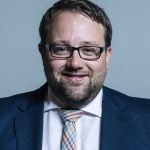
  • Chris Elmore – 2025 Speech on Human Rights Day

    Chris Elmore – 2025 Speech on Human Rights Day

    The speech made by Chris Elmore, the Foreign Office Minister, in London on 10 December 2025.

    Good morning.

    It’s great to see you all today.

    The UN’s theme this year – “Human Rights, Our Everyday Essentials” – couldn’t be more timely.

    And it really resonates with me after my visit to Jamaica to see the aftermath of Hurricane Melissa, just five short days ago.

    We often speak about our basic human rights and needs in jest, but meeting a seven year old boy – who will be eight-years-old on the 28th of December – in Jamaica last week, whose home was destroyed by Hurricane Melissa and whose only Christmas wish was a working toilet, brought home to me the stark reality of millions around the world living without these essentials, whether through disaster, poverty, conflict or political oppression.

    Hurricane Melissa was devastating, and I pay tribute to the Government of Jamaica and its people for their extraordinary response and resilience in the face of such hardship.

    Today we reflect on how human rights are at the heart of our daily lives and when I talk about human rights, I also mean democracy and the rule of law.

    The three go hand in hand.

    Yet today, more and more people threaten to roll-back our hard-won freedoms.

    That’s why our commitment to human rights – here at home and around the world – matter.

    Not just because it’s morally and legally right, though of course it is, but because it’s in our shared interest. They allow us as individuals, as communities and as societies to thrive and prosper.

    As an MP, I’ve seen people campaigning for fairness, equality and safety.

    From local charities helping the homeless, to residents campaigning for clean air, to families hosting thousands of Ukrainian refugees.

    This is civic engagement at its best – people exercising their rights to speak out, to organise, to assemble, and to live free from discrimination.

    But it’d be a mistake to think that human rights are there just to protect our freedoms.

    Because they also serve our national interest, our security, our growth and our long-term prosperity. 

    Respect for the rule of law gives businesses confidence.

    Economic and social rights help create a healthy, educated workforce.

    And the right to life, freedom from torture, freedom of religion or belief and expression keep us safe.

    Security and prosperity cannot be achieved without guaranteeing human rights.

    How we protect rights must also evolve to reflect the challenges of the 21st century.

    We believe in the European Convention on Human Rights.

    It helped create a neighbourhood of countries with a strong record on human rights, directly contributing to the peace and security Europe has enjoyed since the second world war.

    It has also delivered real benefits for British people – a full inquest for the families of the Hillsborough victims, the abolition of corporal punishment in schools, and the right for gay people to serve in our armed forces.

    So of course, the UK remains committed to the Convention.

    At the same time, we also believe that it must evolve to face the challenges of the day.

    As the Prime Minister has said, we need to modernise how it’s interpreted in the context of irregular migration.

    And that work is already underway, with the Deputy Prime Minister in Strasbourg today meeting other Justice Ministers to take it forward. 

    But laws and conventions only matter if they make a difference to real lives.

    And right now, across the world, too many lives are under attack.

    • Palestinians assaulted in olive groves in the West Bank.
    • Women in the DRC raped with impunity.
    • Prisoners tortured in Damascus.
    • Children killed by missiles in Ukraine.
    • And crimes in Sudan so appalling that they can be seen from satellites in space.

    These are outrageous examples of tragedies, entirely inconsistent with international human rights and humanitarian law, and they are unfolding as we speak.

    They remind us why we must act.

    Doing nothing will only normalise impunity, making everyone, everywhere less safe.

    That is why FCDO funds partners in Syria to document atrocities and build evidence to achieve accountability.

    That is why we work with leaders like Nobel Laureate Dr Denis Mukwege on a survivor-centred approach when addressing sexual violence.

    And that’s why the Foreign Secretary, who sends her apologies today, is personally determined to end impunity for sexual violence in conflict, pursue peace in Gaza and the West Bank, and drive urgent action in Sudan.  

    But we cannot do this alone.

    Today as we mark the end of 16 days of Activism to End Gender-Based Violence, it is clear that we all have a role to play.

    Over the last two weeks, my officials have met activists and organisations working to stop violence against women and girls in Sudan and elsewhere.

    We want to do everything possible to help amplify their calls for justice and change and it makes me immensely grateful for the work you do.

    Not just in responding to these issues but in raising their profile, keeping the pressure on us to act, and holding us to account to do so.

    That’s why I’m concerned that civil society is under attack in so many countries because of repressive legislation.

    I want to pay particular tribute to courageous human rights defenders and advocates around the world, putting their lives in danger day after day to fight for what’s right.  

    I’m honoured that some of them are with us today, and I look forward to hearing from them shortly.

    Now, last year my predecessor set out the FCDO’s approach to human rights and governance.

    I’m proud of the progress we’ve made since then and I will build on this excellent work.

    We’ve strengthened the rule of law worldwide by offering free legal expertise in over 50 countries.

    We’re holding war criminals to account, including for war crimes committed in Ukraine. 

    We helped set up the Atrocity Crimes Advisory Group which supports the Ukrainian government in delivering justice.

    We’re supporting the establishment for a Special Tribunal for the Crime of Aggression against Ukraine, and I am pleased that we formally endorsed its legal basis earlier this year.

    And we’re championing equal rights for all, including through the Deputy Prime Minister’s powerful global campaign to ensure every child grows up in a safe, loving family environment.

    Yet there is still so much to do.

    And that’s why I’m pleased that the UK has been re-elected to serve on the UN Human Rights Council for the next two years, giving us the chance to share our experiences with others.   

    Now, while this is a significant opportunity, I know that many of you are concerned about cuts in our foreign aid budgets.

    So I want to reassure you that we’re determined to find new innovative ways to support change on the ground, working ever more closely with local actors, focusing on impact, and publicly reporting what we do.

    And all of this will be backed by a strong diplomatic network of Embassies and High Commissions who will continue to champion these agendas around the world.   

    And we’ll use our influence in the multilateral system to keep human rights at the heart of its work while making sure they remain the foundation of all that FCDO does.

    Because it is only when human rights are protected that everyone has the chance to live with dignity and freedom. And that freedom being understood.

    Thank you all.

  • Yvette Cooper – 2025 Locarno Centenary Speech

    Yvette Cooper – 2025 Locarno Centenary Speech

    The speech made by Yvette Cooper, the Foreign Secretary, on 9 December 2025.

    Thank you very much, your Excellencies, Ladies and Gentlemen, let me welcome you to the Foreign Office, as we commemorate the hundredth anniversary of the Treaty-signing from which these great rooms derive their name.

    Je suis desolée, que – contrairement a mon predecesseur – Austen Chamberlain, I am unable to preside over today’s events in fluent French.

    But thank you to Dominique for that introduction and to the Swiss Mission in London for co-hosting today’s event.

    And let me also welcome the Mayor of Locarno, here today to represent the ‘City of Peace’ where the Treaties were negotiated one hundred years ago.

    And I’m pleased to say that we are also joined by representatives of other countries that signed the Treaties in this room in 1925, as well as our friends from other nations who share a common interest in the search for peace on our continent, and a resolution to conflicts across the globe today.

    So this afternoon, I want to commemorate the signing of the Locarno Treaties, and to reflect on what the Spirit of Locarno can teach us about responding to the rapidly changing security challenges facing our world today.

    Looking back at the coverage of the Treaty-signing from 1925, I was struck by how modern some of the discussion felt. There was even what we would nowadays call a ‘spin row.’ It seems that exclusive filming rights for the ceremony were sold to the Gaumont Company and the British media were furious. And even worse, in an attempt to protect that exclusive deal – over-zealous Foreign Office officials called for police to remove press photographers from the courtyard below us.

    The result was that, in the three weeks after the ceremony, there were four separate debates in Parliament about the filming row – and just one about the military consequences of the Locarno Pact.

    But beyond all the noise, it’s clear from every contemporary account of the Treaty ceremony that the unmistakable sense there was among all of those present about the weight and importance of what they were trying to achieve, and the duty that they owed to the peoples of Europe to succeed.

    Every delegate spoke about the cause of international unity. Seven years on from the end of the Great War, the memory of the millions lost and the debt of peace owed to them weighed heavily on all involved.

    Millions of people like Lieutenant Eric Henn, who – in the summer of 1914 – had come second in the entrance exams for a place here at the Foreign Office. But instead of starting his new job in this building, he volunteered to join the army. He shipped out to France in 1915, and was killed just a month later.

    All that potential, stolen too soon. And for his mother and father, their only child lost. In 1925 millions of parents were in that same situation, still mourning their lost sons and daughters. Which explained why men and women standing in this great room a hundred years ago openly wept when the French Foreign Minister Aristide Briand quoted a letter that he had received after the Locarno Conference.

    It said: “Allow the mother of a family to congratulate you. At last, I shall be able to look at my children without apprehension, and love them with security.”

    King George V wrote in his diary that night: “I pray this may mean peace for many years. Why not forever?”

    Of course, forever was not to be.

    We could spend hours debating how far the flaws in the Treaties led to their demise – the weakness of the guarantees of Polish and Czech sovereignty, the limited institutional underpinnings, or lack of resilience within the signatory nations.

    But as contested as the letter of the Locarno Treaties still is, we should not forget that it was the spirit of the common endeavour that in 1925 was so striking and that matters still. And we should not forget how brave and radical it seemed at the time.

    As the award speech at the Nobel Peace Prize Ceremony stated the following year, and I quote, “If we are to appreciate fully what these statesmen accomplished, we must not overlook the violent nationalistic opposition in their own countries which several of them had to overcome to push through the peace programme.”

    A group of political leaders choosing to pursue peace and unity, and recognising that partnerships with nations abroad made them stronger and more secure at home.

    And that is the spirit that matters just as much today, at a time of huge global instability, in a world where we face ever more complex hybrid security threats.

    The most acute of which for us right now lies in Russia’s war against Ukraine.

    It has been nearly four years since Vladimir Putin led his illegal invasion into Ukraine.

    Unprovoked.

    Unjustifiable.

    And unforgivable.

    In the period since, Ukraine has been subjected to drone and missile strikes day-in, day-out targeting civilians.

    While Russia has embarked on an appalling campaign to abduct Ukrainian children and ‘re-educate’ them to adopt pro-Russian views.

    But each time, the Russians have underestimated Ukraine and underestimated their friends.

    No one wants this war and the suffering and destruction it has wrought to continue.

    Least of all Ukraine.

    That is why the attempts by the US and President Trump to broker a ceasefire and pursue a sustainable end to this war are so important.

    It is why just over the road in 10 Downing Street yesterday, the Prime Minister hosted President Zelenskyy alongside E3 counterparts to talk about the prospects for peace.

    And yesterday, I met Secretary Rubio and others in Washington D.C. to discuss the negotiations and the path towards an agreement.

    An agreement which must be just.

    Which must be lasting.

    And which must deter Russia.

    Not give them simply a platform to come again.

    And it must be acceptable to Ukraine.

    But while we have two Presidents pursuing peace, the Russian President has continued to escalate the war with drones and bombs.

    Russia’s aggression and security threats go far beyond Ukraine. We’ve seen sabotage in European cities. Reckless breaches of NATO airspace. Relentless cyber-attacks. A full spectrum campaign. To test us. To provoke us. And to destabilise us.

    And that is why the UK has so consistently supported Ukraine in its efforts to resist Russian aggression.

    Because this is the right thing to do.

    Morally, and strategically.

    For Ukraine yes, but also because it is our security that is at stake too.

    But while those ceasefire discussions for Ukraine continue, I want to just take a step back and reflect on how the current security challenges that we and partner nations face relate back to the principles established through the Locarno Treaty 100 years ago.

    And I want to offer two reflections – firstly, on the transformed nature of security threats compared to a century ago, and how that means we need to respond.

    But secondly, on the changing partnerships and the renewed multilateralism we need if we are to confront the full range of shared threats we face.

    So first on the threats.

    Armed conflict is of course the threat uppermost in our minds as we think of Ukraine. Other traditional security threats have not gone away – from border disputes through to terrorism and nuclear proliferation.

    But novel and hybrid threats to our collective security have emerged which would have been inconceivable a century ago.

    From tampering with undersea communications cables to using biotechnology and AI as new kinds of weapons of war, those threats come in many different forms, and from many different quarters.

    Some of these threats are flagrantly visible – the spy ships in our waters, or the acts of violence, terror or sabotage in our cities.

    Some have not always been recognised for the threats that they pose, in particular on issues of economic security, for example the over-reliance of European nations on imports of energy from Russia or also on China for the critical minerals that we need.

    And across Europe we are witnessing an escalation in hybrid threats – from physical through to cyber.

    Designed to weaken our critical national infrastructure, undermine our interests or destabilise our democracies, all for the advantage of malign foreign states.

    Some of these threats have echoes a hundred years ago. Two years before Locarno in 1923, the Soviet Union coined the expression ‘Dezinformatsiya’ and set up their first office to deploy disinformation.

    But the term disinformation does not begin to capture the industrial scale approach from some malign actors today.

    A hundred years ago, state-sponsored disrupters may have relied on expertly forged documents or carefully planted stories to manipulate public opinion. Today’s technology gives them the ability to do that on steroids.

    And in 2024, evidence suggests that automated online traffic surpassed human activity for the first time, with some evidence of malicious bots accounting for more than a third of all messages.

    In the Moldovan elections, two months ago, we saw fake websites designed to be the spitting image of legitimate outlets fabricating policies for politicians they sought to discredit. Across Africa we see videos laundered through apparent news portals with false claims about the Ukrainian president and his wife, seeking to undermine support for Ukraine. And across Europe, we see Russian agencies responsible for vast malign online networks like Doppelgänger that seek to flood social media with counterfeit documents and deepfake material in English, German, and French, to advance Russia’s strategic aims.

    This isn’t about legitimate debate on contentious issues. We have wide-ranging debates, with strong views on all sides, on many things. But this is about state-backed organisations who seek to do us harm pursuing malign aims.

    So we should call this out for what it is – Russian information warfare. And we are defending ourselves.

    That is why we have built world-class cyber security, expert law enforcement and intelligence capabilities.

    Why, since October 2024, this government has sanctioned 31 different organisations and individuals responsible for delivering Russia’s information warfare.

    And why today I have gone further in exposing and sanctioning Russian media outlet Rybar, whose Telegram channel and network of affiliates in 28 languages reaches millions worldwide. Using classic Kremlin manipulation tactics, including fake ‘investigations’ and AI driven content to shape narratives about global events in the Kremlin’s favour.

    Masquerading as an independent body, Rybar is in fact partially coordinated by the Presidential Administration. And receiving funding from Russian state corporation Rostec and working with members of the Russian Intelligence Services.

    We have also sanctioned Pravfond, attributed by Estonia as a front for the GRU. Leaked reports suggest that Pravfond finances the promotion of Kremlin narratives to Western audiences as well as bankrolling legal defences for convicted Russian assassins and arms traffickers.

    And our new measures will also hit Moscow-based ‘think tank’, the Centre for Geopolitical Expertise, and its founder Aleksander Dugin, whose work closely informs Putin’s calculations. And an organisation whose senior leaders are involved in Storm-1516, a malign influence network which produces content designed to create support for Russia’s illegal war in Ukraine.

    But it isn’t just Russia.

    Other countries are also enabling or ignoring this kind of undeclared action or cyber threats.

    And that is why today, with support from our international partners and allies, we are also sanctioning two of the most egregious China-based companies, i-Soon and Integrity Technology Group, for their vast and indiscriminate cyber activities against the UK and its allies.

    Attacks like this impact our collective security and our public services, yet those responsible operate with little regard for who or what they target.

    And so we are ensuring that such reckless activity does not go unchecked.

    And our message to those who would harm us is clear – we see you in the shadows; we know what you are doing, and we will defend ourselves and the international partnerships on which we depend.

    And it is those partnerships with our allies around the world that have enabled the steps we have taken today.

    The growing cooperation between teams in the UK, in France, Germany, Poland, Brussels and other countries that has led to these sanctions.

    Pooling expertise, understanding and evidence.

    And that’s what takes me to my second reflection on the collective Locarno spirit, and why multilateral action matters more than ever, but why it needs to modernise and adapt.

    Because faced with growing global instability, there is a tendency to talk of two clashing perspectives.

    One – that the era of traditional multilateral partnerships or collective commitments is over.

    That, as we move into the second quarter of the twenty-first century, only great power politics matters.

    Or alternatively, that at a time of global turmoil, we need to revert solely to the multilateral architecture built up since the Second World War as the only safe refuge, and dare not risk stepping outside it or asking it to change.

    Neither are true as an account of the world or as an account of UK foreign policy and our national interests today.

    The first ignores the lessons of history; that we are stronger if we tackle shared threats together.

    But the second ignores the realities of today, where longstanding institutions, important as they may be, can be too constrained or too slow to respond

    What we need instead in today’s world is to approach every challenge and tackle every threat by finding the most effective means of cooperation to get each job done.

    Creative diplomacy.

    Diplomatic entrepreneurialism.

    A new and reinvigorated and more agile form of multilateralism, adapting to the demands of the task. Drawing on our long-standing relationships and multilateral institutions but also adapting, reforming and building new partnerships too.

    That’s the approach the UK is taking. But it also reflects what we also see around us.

    Just look at the range of new and old groupings that helped to create the conditions for peace in the Middle East and the ceasefire in Gaza.

    In the last few months, we have seen the world come together to support the US-led peace process in Gaza.

    The 20-point plan drawn up by President Trump, working with mediators from Qatar, Türkiye and Egypt.

    All following the commitments made by the whole of the Arab League to isolate Hamas, the recognition of Palestine by the UK and dozens more nations at the UN, and a Declaration then endorsed by 142 countries.

    And a ceasefire agreement supported by over 25 nations at Sharm El-Sheikh, followed weeks later by a UN Security Council resolution to support implementation on the ground and provide the mandate to move forward.

    So that was leadership by the US, with new and agile partnerships for peace coming together from across the globe but underpinned by multilateral institutional agreement. It’s not multilateralism as we have always known it, but it is essential in today’s world and must be matched by further work to reform and adapt.

    But look at other examples. The E3 cooperating on the nuclear threat from Iran, or the vital work now underway that we are supporting in the Quad and at the UN to seek to secure a humanitarian ceasefire in Sudan.

    And the new deals that Britain has agreed with France on migration returns, and with Germany on tackling smuggling gangs, as pilots for broader cooperation in future.

    In each case, we see new partnerships of like-minded countries with the agency and will to secure rapid breakthroughs, supported by later, broader agreements, rather than having to wait for them.

    And nowhere does that matter more than on our collective response to that most immediate national security challenge that we face – that I have already talked about – on Russia and Ukraine.

    So there too, we have worked to strengthen and reinvigorate NATO – the cornerstone of European security. But we’ve also worked flexibly and creatively to bring likeminded countries together in Europe and beyond.

    Working with the US on the peace process. But also, thanks to the leadership the Prime Minister has shown, working with France to establish the Coalition of the Willing. More than 30 countries signing up – including all the original Locarno signatories – and not just in Europe, but beyond, because we all recognise the threat Russia poses.

    For too long, Europe has relied too heavily on US support to protect ourselves from the threats to Euro-Atlantic security.

    And we can do so no more.

    Europe must step up.

    Because it is fundamentally in our own interests. And because our continent, is, first and foremost, our responsibility.

    And because the Transatlantic partnership will be stronger and more durable if that burden is properly shared.

    And so earlier this year, the Prime Minister took the decision to boost defence spending up to 5% of GDP by 2035 – making difficult trade-offs in the meantime.

    But it’s also why we are deepening cooperation and partnerships on security around the world, including for example, our Carrier Strike Group. Conducting operations with partners beyond NATO across the Indo-Pacific, but then placed directly under the command of NATO on its return leg, reflecting still that centrality of NATO in all that we do.

    That is how UK will operate – agile and pragmatic partnerships for the sake of our national security, our shared interests, and the principles we champion across the world.

    So yes, that’s why I believe the centenary we mark today is so important. A vital reminder – that when we discuss the modern threats that we face, whether it be from information warfare to the shared risks to our economic security, to cyber security, border security and beyond – that the Locarno spirit is not a quaint relic of times long gone, but an essential lesson from history.

    A reminder that for us in the UK, the partnerships we build abroad make us stronger and more secure here at home.

    And to reinforce that, let me quote the words of German Foreign Minister Gustav Stresemann, spoken in this great room one hundred years ago after he added his name to the Treaties.

    He said, “One fact has emerged, namely that we are bound to one another by a single and a common fate. If we go down, we go down together; if we are to reach the heights, we do so not by conflict but by common effort.”

    And Doctor Stresemann’s words are as vital and as powerful now as they were one hundred years ago. He reminds us of the duty we all have – every person, every leader and every nation – to work together in the pursuit of peace, security and democracy, and to stand together against anyone who threatens that goal.

    That is our task today as surely as it was 100 years ago, and that is the Locarno spirit which we must now keep alive.

    Thank you very much.

  • Chris Elmore – 2025 Statement on Abductions in Nigeria

    Chris Elmore – 2025 Statement on Abductions in Nigeria

    The statement made by Chris Elmore, the Parliamentary Under-Secretary of State of Foreign Affairs, in the House of Commons on 27 November 2025.

    My noble Friend the Minister of State for International Development and Africa (the right hon. Baroness Chapman of Darlington) has today made the following statement:

    I am writing to update the House on recent abductions in Nigeria, and the UK’s ongoing security partnership with Nigeria.

    In the last week, Nigeria has faced a further series of abhorrent abductions from schools and churches, including the attack on St Mary’s catholic school in Niger state, which is one of the largest recorded mass abductions in the country’s history. These crimes are intolerable. Everyone should be safe to exercise their fundamental human rights to education and freedom of worship. The UK stands firmly with the people and Government of Nigeria during this difficult time, and of course with the families of those children who have been abducted.

    As a valued Commonwealth friend, we are working closely with our Nigerian partners as they respond to these incidents, and welcome the efforts to date to secure releases of schoolgirls in Kebbi state and worshippers in Kwara state. One year on from the signing of the UK-Nigeria strategic partnership in November 2024, which includes our security and defence partnership as a key pillar, our co-operation continues to strengthen security and prosperity. This includes assisting the Nigerian Government to establish a dedicated unit, the multi-agency kidnap fusion cell, which brings together Nigeria’s police, military and justice agencies to rescue victims and bring perpetrators to justice.

    The safety of school children is paramount. UK education funding has supported school safety improvements including through the “Partnership for Learning for All in Nigeria Education” programme. In March 2025, with UK support, a safe school rapid response co-ordination centre was launched in Jigawa state, providing training and deployment of security personnel to public schools.

    Abductions and kidnap for ransom remain a prevalent issue across Nigeria. Across the country, insecurity continues to devastate communities and severely impact ordinary people, driving displacement, heightening protection risks and eroding livelihoods. In the north-east, terrorist groups including Boko Haram and Islamic State West Africa have indiscriminately killed individuals not just from Christian but also from Muslim communities. In the north-west and north-central, criminal bandits are primarily targeting communities for profit and ransom.

    This Government are committed to strengthening our security and defence partnership with Nigeria to address the roots of insecurity. In my meeting with Nigeria’s Foreign Minister, Yusuf Tuggar, on 11 November, we discussed the security situation in Nigeria and issues relating to freedom of religion or belief, and the Foreign Secretary also discussed with him on 10 November the ongoing importance of UK-Nigeria security co-operation.

    Through our security and defence partnership, we are helping to build capacity within Nigeria’s security agencies to effectively undertake counter-terrorism operations, investigations and intelligence analysis to prevent future attacks. Our “Strengthening Peace and Resilience in Nigeria” programme is working with Nigerian partners to address the root causes of intercommunal conflict, support collaboration and productive livelihoods for farmers and pastoralists and strengthen conflict early warning and response systems.

    Through our strategic partnership, this Government remain committed to working with the Government of Nigeria to tackle insecurity in all its forms.

    We will continue to express our solidarity with the people of Nigeria, to express our condemnation of these abhorrent abductions, and to stand up for freedom of religion or belief both in Nigeria, and throughout the world. We join the Government of Nigeria in calling for the safe return of all those who have been kidnapped, and call for all perpetrators to be brought to justice.

  • Calum Miller – 2025 Speech on Gaza and Sudan

    Calum Miller – 2025 Speech on Gaza and Sudan

    The speech made by Calum Miller, the Liberal Democrat MP for Bicester and Woodstock, in the House of Commons on 18 November 2025.

    I thank the Foreign Secretary for advanced sight of her statement, which I welcome.

    The Foreign Secretary is right that the scale of the humanitarian catastrophe in Sudan is horrendous, as are accounts of systematic murder, rape and torture, often targeted at civilians from specific ethnic groups, and, in particular, the widespread use of sexual violence towards women and girls. The UK has a special responsibility as the penholder for Sudan at the UN. We must be relentless in pursuing true protection for civilians, so will the Foreign Secretary update the House with her assessment of the role of external actors in supporting the warring parties? Will she lead efforts at the UN to secure and implement a country-wide arms embargo? How will the UK ensure that the UN inquiry that she referred to can gather evidence, so that those actors, both inside and outside Sudan, who are responsible for these atrocities are held to account?

    Turning to the middle east, last night’s UN Security Council resolution marks an important step forward, and I hope that it will reinforce the fragile ceasefire in Gaza. However, vital details are missing from the resolution. What will be the remit and scope of the international stabilisation force? How will Hamas be disarmed? How will those responsible for atrocities in Gaza be held accountable, and how does the Foreign Secretary envisage that a Palestinian committee will ensure that Palestinian self-determination is respected?

    The resolution focuses on Gaza, but we desperately need a clear road map to securing a two-state solution. That requires an end to illegal settlements in the west bank and East Jerusalem, and reform of the governance of the Palestinian Authority. How is the UK supporting reforms to the PA, and will the Foreign Secretary today commit to banning all UK trade with illegal settlements?

    Yvette Cooper

    I welcome the response by the Liberal Democrat spokesperson. I agree with him about the importance of an arms embargo around Sudan, and about ensuring that it is properly implemented. It is deeply disturbing that weapons are still being supplied to the RSF, despite the atrocities, and that there are still weapon flows to all sides. That means that there are immensely serious issues, including around borders, access and routes, that we need to continue to pursue through international pressure.

    The hon. Gentleman raised a point about the investigations. The UN Human Rights Council resolution that the UK drafted with partners provides for the UN-led investigation of these atrocities, but that will be scant comfort to anyone if there is not also the urgently needed action to prevent further atrocities. There must be accountability, but there must also be urgent action to prevent atrocities in the first place.

    On Gaza, work is under way to constitute the International Stabilisation Force. Some countries are prepared to come forward and contribute, and crucially the mandates were provided last night. The ISF must operate in line with international law. Further details of how the new Palestinian committee will operate need to be developed, and we want it to be constituted as rapidly as possible. Also, we must see an end to illegal settlements. We need to rebuild the connections between the west bank, Gaza and East Jerusalem, so that we can have a Palestinian state, in which people live in peace and security, alongside the Israeli state. That is the only way that we will get to peace for both.

  • Sarah Champion – 2025 Speech on Gaza and Sudan

    Sarah Champion – 2025 Speech on Gaza and Sudan

    The speech made by Sarah Champion, the Chair of the International Development Committee, in the House of Commons on 18 November 2025.

    This morning, Members received a private briefing on Sudan, at which one of the academics stated:

    “El Fasher is a slaughter house. Our low estimate is 60,000 people have been killed there in the last three weeks.”

    That would make it the biggest atrocity crime since the 1990s. These are civilians, not soldiers, and this is not about conflict; it is about genocide. The Foreign, Commonwealth and Development Office has been briefed on the likelihood of a mass-casualty event for years. In November 2021, the FCDO was publicly warned of a likely genocide. The recent Independent Commission for Aid Impact report concluded that last year, officials took “the least ambitious option” on civilian protection. I say to the Foreign Secretary that scrutiny and diplomatic surge can slow down this slaughter, so are we leading the 25 states who signed the joint statement on 11 November to work together to put pressure on the United Arab Emirates? Why has our atrocity prevention team not been surged? Tawila now needs to be our focus of our protection. What are the evacuation plans to protect up to 650,000 people from genocide? The Sudanese civilians need a champion. As UN penholder, will that be us?

    Yvette Cooper

    I thank my hon. Friend for her work and that of her Committee on this issue. She is right to point out the truly horrendous nature of what is happening in Sudan and the atrocities that we have heard about. People have been executed in the middle of a maternity hospital and lives are being lost at scale, and the fact that so few people are emerging from the area makes it deeply troubling to consider what more we may discover. Because I am so deeply concerned, I have raised the issue not just at the Manama dialogue, but at every international discussion that we have been having with foreign ministers, and directly with all members of the Quad, including the UAE and the US, as well as Saudi Arabia and Egypt, as we need urgent action. I agree with my hon. Friend that this is also about preventing further atrocities, which are at risk of happening at any moment if we do not have that urgent action.

  • Andrew Rosindell – 2025 Speech on Gaza and Sudan

    Andrew Rosindell – 2025 Speech on Gaza and Sudan

    The speech made by Andrew Rosindell, the Shadow Foreign Affairs spokesperson, in the House of Commons on 18 November 2025.

    I thank the Foreign Secretary for advance sight of her statement. His Majesty’s Opposition welcome the passing of the US-drafted resolution at the United Nations Security Council yesterday. The US has shown consistent leadership on the middle east, and for that we are grateful. Hamas must now release the final three deceased hostages. We keep their loved ones, and the families of all the deceased hostages, in the forefront of our thoughts. We cannot even begin to imagine what trauma they have endured.

    Key to yesterday’s resolution was a mandate for the International Stabilisation Force, but can the Foreign Secretary set out exactly what Britain’s contribution will be to that force? The Government speak about the need for the force to be deployed quickly, to avoid a potential power vacuum being filled by Hamas. What is Britain’s contribution? Are we looking at technical assistance, the sharing of expertise or intelligence, funding, action on the ground, or all of the above? It is important that the Foreign Secretary is clear and precise about those details. Will she also update the House on which countries are expected to participate, and say what their contributions will be?

    Of course, the removal of Hamas from power and their full disarmament are vital if we are to turn this ceasefire into a sustainable end to the conflict and the cycles of violence. Following yesterday’s vote, what practical contribution will the UK make to those efforts? The Foreign Secretary will be aware that there are several points in the US President’s plan specifically on that, so where does the UK dock into those initiatives? Has she identified which areas the UK will focus on as a contribution to the broader transitional day-after plan? Can she at least confirm that a fundamental curriculum and education overhaul in Gaza, and indeed the west bank, will be a key focus? We have seen huge strides elsewhere in the middle east in that domain, and this must now be a moment of reckoning for the curricula in the Occupied Palestinian Territories—that is vital if we are to build a sustainable peace.

    On the immediate humanitarian crisis in Gaza, what practical actions is the Foreign Secretary undertaking with the Government of Israel to achieve the surge in aid for innocent civilians that we all want to see? Specifically, which crossings does she believe will need attention? What is the quantum of designated British aid that is not getting over the border into Gaza? Have specific proposals and solutions been conveyed by the British side to Israeli Government counterparts on how to address the bottlenecks that we all want to see resolved?

    Turning to the situation in Sudan, in El Fasher and elsewhere we continue to witness atrocities, suffering and human misery beyond words, all in plain sight of a watching world. Accountability must be administered. In the immediate term, the UK should be trying to spearhead a step change in the level of pressure on the warring parties to agree a comprehensive ceasefire. As my right hon. Friend the shadow Foreign Secretary has argued, we need heavy new sanctions on key operators, and action to deter entities, individuals and businesses whose support continues to sustain the conflict. Will that be forthcoming, and what discussions is the Foreign Secretary having on that with counterparts in the US, the EU, the Sudan quad and others? Will she also update the House on the Government’s response to US efforts to bring about a humanitarian ceasefire, and say what role Britain is playing in that?

    On the dire humanitarian conditions, it was confirmed at the Dispatch Box earlier this month that the shifting of frontiers in the conflict is affecting aid delivery. How has the situation evolved in the past two weeks, and what levers can be pulled to try and smash through obstacles to aid delivery? Finally, on day-after planning, will the Foreign Secretary update the House on efforts to build up the capacity and capabilities of organic civilian political groups, to give Sudan the best chance of moving to stable civilian government after a ceasefire? We have seen what the US has achieved through the UN Security Council on Gaza this week, and I hope that similar initiatives will be possible with regards to Sudan. As penholder, the UK Government have a special responsibility, so will the Foreign Secretary confirm her next steps on the UNSC? As the conflict moves from bad to worse, we must shift gear.

    Yvette Cooper

    I thank the hon. Gentleman for his response to the issues relating to Gaza and Sudan, and I will take his points in turn. We do not expect the UK to contribute troops to the international stabilisation force, but we are already providing military and civilian deployment into the civil-military co-ordination committee that is led by the US. It is drawing up practical arrangements for implementing the 20-point plan. On the nature of the role that we expect to continue to play, we already provide training for Palestinian police, for example, and I have met US military forces who are involved in that training. I met them in Jordan, and other countries are also offering to provide such training for Palestinian police, which will be critical to maintaining security and safety. We have also offered expertise on decommissioning. That is an area where, through the Northern Ireland experience, we have experience and expertise, mostly immediately around de-mining capabilities in terms of both funding and expertise.

    The hon. Gentleman raised the issue of curriculum reform, which I agree needs to take place. That is a crucial part of the Palestinian Authority reforms, and I have discussed that directly with President Abbas. The importance of maintaining the commitments that the Palestinian Authority has made to curriculum reform must be central in both the west bank and in Gaza. On practical issues about the opening of crossings, we want to see all the crossings opened and restrictions lifted. The co-ordination committee, which has a UK presence, is working directly with the Israeli Government to seek to improve access and monitoring, and to improve arrangements to get more aid through. I continue to urge swifter action to get that desperately needed aid in place.

    On Sudan, I welcome the hon. Gentleman’s support for sanctions. I have had personal direct discussions with all members of the quad, including most recently the US Secretary of State Marco Rubio last week, and I know how strongly he feels about the terrible, horrendous atrocities that are taking place in Sudan. We will continue to offer our support to that process.

    On aid delivery, based on what the UN and Tom Fletcher have been saying, it looks as though some of the routes into the region are currently completely inadequate, so security and infrastructure need to be provided to get the desperately needed scale of aid into the area. We will need to look at air routes as well as truck routes. He is right to point to the need for the organic support for Sudanese civilian organisations. It is crucial that ultimately we have a transition to a civilian Administration in Sudan and an end to the horrendous fighting, abuse and sexual violence that we have seen, with reports on all sides of those sorts of atrocities taking place.

    Finally, US leadership has been incredibly important in achieving the ceasefire agreement and the peace process so far in Gaza, but it has also depended on the international community coming in alongside the US and working together to deliver the progress so far. We need that same international commitment for Sudan and we need the whole international community to pull together to deliver progress in the same way.

  • Yvette Cooper – 2025 Statement on Gaza and Sudan

    Yvette Cooper – 2025 Statement on Gaza and Sudan

    The statement made by Yvette Cooper, the Foreign Secretary, in the House of Commons on 18 November 2025.

    I want to update the House on two of the world’s gravest conflicts—in Gaza and in Sudan—following recent resolutions in the UN and discussions at the G7, and on the action that the UK Government are taking to pursue peace.

    First, I turn to Gaza. After two years of the most horrendous suffering, the ceasefire agreement led by President Trump with the support of Qatar, Egypt and Türkiye has been in place for six weeks. Twenty hostages are now home with their loved ones, and the remains of 25 more have been returned so their families can grieve. More aid trucks are entering Gaza. But the ceasefire is highly fragile, and there is still a long journey ahead to implement the commitments made at Sharm el-Sheikh and to get to a lasting peace.

    Last night, the UN Security Council passed resolution 2803. The UK voted for this important resolution, which authorises the establishment of an international stabilisation force for Gaza, and transitional arrangements including the board of peace and a Palestinian committee. It underscores the essential need for humanitarian aid and reconstruction, and points the way to a path to Palestinian self-determination and statehood. Crucially, it is supported by the Palestinian Authority, and Arab and Muslim partners in the region and beyond. The resolution is a critical staging post that sustains the unity around President Trump’s 20-point plan.

    Momentum must now be maintained. It is essential that an international stabilisation force and trained Palestinian police can be deployed quickly to support the ceasefire and to avoid a vacuum being left that Hamas can exploit. We will also need the urgent formation of a Palestinian committee alongside the board of peace. As we made clear at the UN last night, these transitional arrangements must be implemented in accordance with international law, and respecting Palestinian sovereignty and self- determination. They should strengthen the unity of Gaza and the west bank, and empower Palestinian institutions to enable a reformed Palestinian Authority to resume governance in Gaza, because Palestine must be run by Palestinians.

    The work to implement the first phase of the ceasefire agreement must continue. That means work so that Hamas releases the bodies of the remaining three hostages taken in the terrorist attack on 7 October, so that their families can properly grieve. We urgently need a major increase in humanitarian aid, because aid into Gaza is still a trickle rather than a flood. Two weeks ago, I visited warehouses in Jordan holding UK aid for Gaza, including one run by the World Food Programme with enough wheat to feed 700,000 people for a month; yet it still sits there because the Jordanian route into Gaza is still closed. People there told me that there were 30 more warehouses nearby, with food, shelter kits, tents and medical supplies—less than 100 miles from Gaza but still not getting in.

    I welcome the very recent improvements in aid flows, and that one more border crossing, Zikim, is now partially open. But it is not nearly enough. We need all land crossings open—including the Rafah border with Egypt— with longer and consistent hours, and urgent work is needed immediately in all parts of Gaza to rebuild basic public services and to provide shelter as winter draws in. Medical staff must be allowed to enter and leave Gaza freely, and international non-governmental organisations need certainty that they can continue to operate. I spoke to the King of Jordan and to doctors in Amman about a maternity and neonatal field hospital unit that stands ready to be moved into Gaza—but, again, they cannot yet get it in. The Israeli Government can and must remove the restrictions and uncertainty now.

    As well as working with the US and others, we are drawing on distinct UK strengths to support a lasting peace. We are providing expertise on weapons decommissioning and ceasefire monitoring, based on the Northern Ireland experience. We are supporting on demining and unexploded ordnance, including with £4 million of new UK funding for the United Nations Mine Action Service, and we are funding to surge in experts, including from British organisations such as the HALO Trust and Mines Advisory Group, whose impressive work I recently saw at first hand. On civil-military co-ordination, we have UK deployments into a dedicated US-led hub for Gaza stabilisation efforts.

    Beyond Gaza, stability in the west bank is essential to any sustainable peace, and I am concerned that the PA faces an economic crisis induced by Israeli restrictions that are strangling the Palestinian economy. The Netanyahu Government should be extending, not threatening to end, the arrangements between Israeli and Palestinian banks—arrangements that are crucial to the everyday economy for Palestinians. This is crucial for stability, which is in Israel’s interests too.

    The pace of illegal settlement building continues. We have seen further appalling incidents of settler violence during the olive harvest. While I welcome Israeli President Herzog’s expression of concern, the response of the Israeli authorities is still completely insufficient—practically and legally. Tackling settlement expansion and settler violence is vital to protecting a two-state solution, in line with the UK’s historic decision to recognise the state of Palestine.

    Let me turn now to Sudan, where the worst humanitarian crisis in the 21st century is still unfolding, right now. The UN humanitarian chief, Tom Fletcher, who has just visited the area, has described it as:

    “the epicentre of suffering in the world”

    and he is right. Over 30 million people need lifesaving aid. Twelve million have been forced from their homes. Famine is spreading. Cholera and preventable disease are rampant. In El Fasher, following advances by the Rapid Support Forces, there are horrifying scenes of atrocities, with mass executions, starvation, and the systematic use of rape as a weapon of war—horrors so appalling they can be seen from space.

    As the United Nations Office for the Co-ordination of Humanitarian Affairs has put it, El Fasher is a crime scene. Satellite pictures show discolouration of sand consistent with pools of blood, multiple clusters of objects consistent with piles of human bodies, and the apparent burning of bodies and operations to dispose of bodies in mass graves. Further horrors will yet unfold unless greater action is taken.

    A year ago, Britain tabled a resolution at the UN Security Council demanding humanitarian access and civilian protection, but it was shamefully vetoed by Russia. Six months ago, at our London-Sudan conference, the UK brought together international partners and secured £800 million in funding, but the situation continues to deteriorate, including with North Kordofan now under threat and fighting moving to El Obeid.

    We need a complete step change in efforts to alleviate the suffering and bring about peace. That means more aid to those in need. The UK has committed over £125 million this year alone, delivering lifesaving support to over 650,000 people—treating children with severe malnutrition, providing water and medicine, and supporting survivors of rape—but the challenge is still access.

    The RSF still refuses safe passage to aid organisations around El Fasher. The Sudanese armed forces are bringing in new restrictions that stand to hinder aid. Both sides must allow unhindered passage for humanitarian workers, supplies and trapped civilians. We are urgently pressing for a three-month humanitarian truce to open routes for lifesaving supplies, but aid will not resolve a conflict wilfully driven by the warring parties, so we desperately need a lasting ceasefire underpinned by a serious political process.

    At the Manama dialogue conference in Bahrain two weeks ago, I called for the same intense international efforts to address the crisis in Sudan as we have seen around Gaza. At Niagara last week, I joined our G7 partners in calling for an immediate and permanent ceasefire, for the unimpeded access of humanitarian aid, and for external actors to contribute to the restoration of peace and security. We are engaging intensively with the Quad countries—the United Arab Emirates, Saudi Arabia, Egypt and the United States—which have now together called for an immediate humanitarian truce, and an end to external support and arms that are fuelling conflict. I strongly support Secretary Rubio’s latest comments regarding the need to end the weapons and support that the RSF is getting from outside Sudan.

    Last Friday, the UK called a special session of the United Nations Human Rights Council, in which a UK-drafted resolution was passed, securing international consensus for an urgent UN inquiry into alleged crimes in El Fasher, because impunity cannot be the outcome of these horrifying events. We need to ensure that teams can get in to investigate those atrocities and hold the perpetrators to account, and I have instructed my officials to bring forward potential sanctions relating to human rights violations and abuses in Sudan.

    The UK will play its full part to ensure that it is the Sudanese people, not any warring party, that determines Sudan’s future. Wars that rage unresolved do not just cause untold harm to civilians; they radiate instability, undermine the security of neighbouring states, and lead migrants to embark on dangerous journeys. We are striving to meet those urgent humanitarian needs, and striving to secure not just the absence of conflict, but the presence of lasting peace. From Gaza to Sudan that can only be done through international co-operation, and through countries coming together for peace. I commend this statement to the House.